
Over rush-hour congestion, you call a local tow, provide location and vehicle details, dispatch prioritizes safety, tow operators coordinate with traffic control, and you receive an estimated arrival and fee so you can plan next steps confidently.
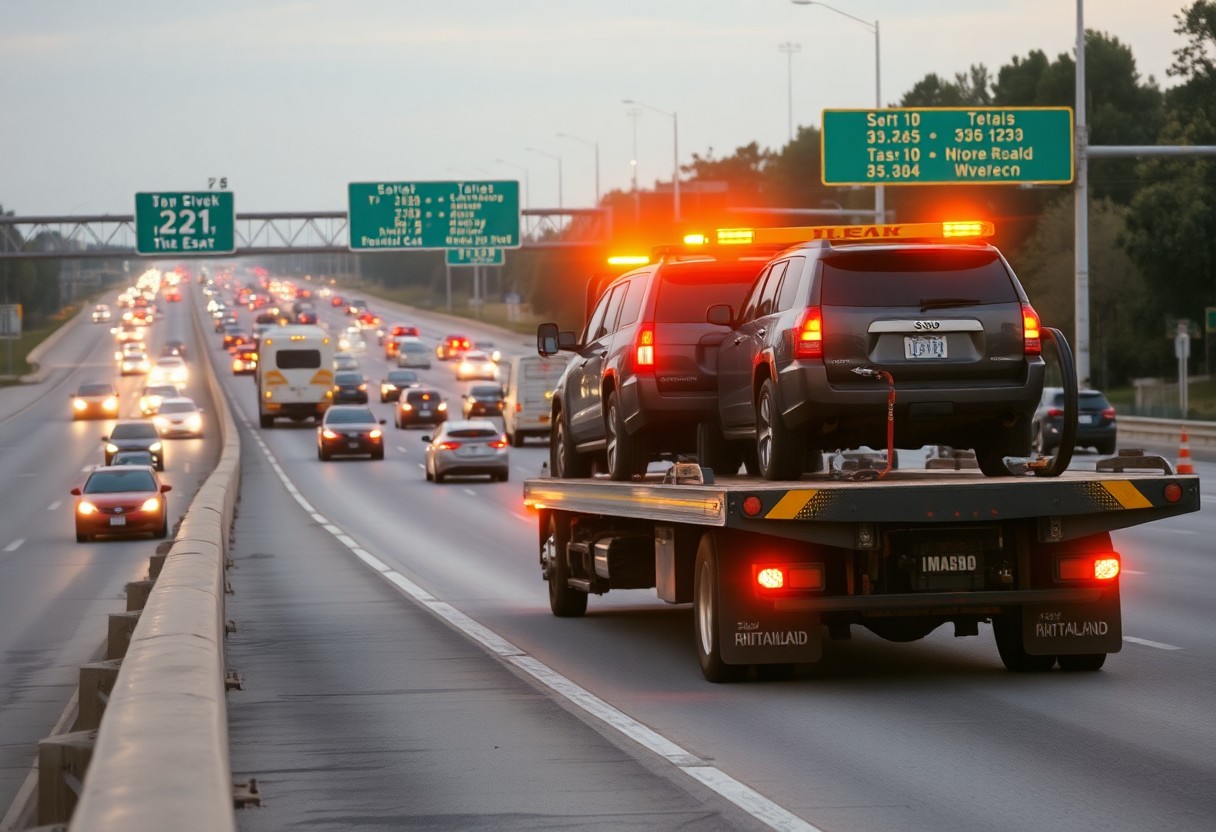
Allen Traffic Dynamics and Peak Hour Challenges
Rush-hour patterns in Allen compress travel times and force you to adjust tow expectations, as slow-moving queues and frequent stop-and-go traffic create more incidents and longer clearances.
Identifying high-congestion corridors on US-75 and Stacy Road
US-75 and Stacy Road develop recurring bottlenecks where you should expect delayed access for tow trucks, especially near interchanges and commercial nodes during morning and evening peaks.
Impact of commuter volume on emergency response windows
Commuter surges shrink your available emergency response windows, raising wait times and complicating safe on-scene operations when lanes are congested and sightlines are poor.
You should plan for extended scene times during peak commuter flows, coordinating with dispatch to stage tow vehicles outside the flow, use spotters to protect crew, and allow law enforcement to control lanes; these steps reduce risk and improve clearance speed when traffic density limits immediate access.
Strategic Dispatch and Navigation Protocols
You rely on dispatchers using traffic models and priority rules to route trucks, reducing response times during peak hours while keeping you informed of arrival estimates.
Utilization of real-time GPS and traffic monitoring systems
Using live GPS and traffic feeds, you get dynamic ETAs and route adjustments so tow trucks avoid gridlock and reach you faster.
Pre-positioning units in high-incident zones for rapid deployment
Positioning units near frequent-incident corridors lets you receive help quicker, with crews already close to likely problem spots during rush periods.
Staging units along arterial routes and near freeway ramps allows you to benefit from predictable coverage; dispatchers assign shifts to keep crews refreshed at peak times, adjust positions based on live incident data, and coordinate with highway patrol so tow trucks can intercept disabled vehicles before congestion cascades.

Specialized Equipment for High-Traffic Recovery
You rely on slide-bed rigs, traffic-control boards, and portable winches that let crews remove vehicles quickly without prolonged lane closures, minimizing delays and hazards during rush hour.
Maneuverability of wheel-lift trucks in restricted lanes
Wheel-lift trucks offer compact setups so you can free a disabled vehicle from narrow lanes without blocking traffic, using precise lifts and short wheelbases to fit between cars.
Safety benefits of flatbed towing for highway clearance
Flatbed towing secures your vehicle off the roadway, preventing secondary collisions and further damage while crews restore traffic flow with reduced lane closures and safer working space.
When you opt for flatbed recovery, operators use winches and tilt decks to fully load and immobilize the vehicle, eliminating sway and drag; that containment speeds clearance, reduces exposure for you and responders, preserves vehicle condition for inspections, and shortens overall incident time on busy highways.

Safety Procedures in High-Speed Environments
During rush-hour recoveries, you rely on high-visibility lighting, staggered vehicle placement, and strict speed control to reduce collision risk and protect crews operating near fast-moving traffic.
Compliance with Texas “Move Over” laws during recovery
You must move over or slow well below the limit when approaching a recovery; signaling and yielding the lane give tow operators space to work and lower chances of secondary crashes.
Establishing secure perimeters to protect drivers and operators
While setting a protected zone, you deploy cones, flares, and warning signs, position tow trucks to shield crews, and assign a lookout to monitor oncoming traffic.
Set layered barriers that reflect posted speeds and traffic volume: cones backed by a positioned tow truck as a physical shield, illuminated arrow boards, and a pilot vehicle when closing lanes. You should coordinate with law enforcement to manage temporary lane changes, keep radio contact with your crew, and update dispatch so everyone maintains situational awareness and safe spacing.
Coordination with Allen Municipal Authorities
Allen municipal contacts coordinate permits, lane-use approvals and towing priorities so you get prompt clearance and minimized delays during rush hour.
Liaison with Allen Police Department for scene management
You work with Allen Police to secure scenes, set temporary traffic patterns, and document incidents for expedited tow authorizations.
Roles in the Traffic Incident Management (TIM) framework
Dispatch protocols define how you request resources, report incident severity and log clearance times within the TIM framework.
Your responsibilities in TIM assign you tasks: prioritize life safety, coordinate scene stabilization with police and fire, manage traffic flow and expedite removal. Agencies expect you to communicate estimated clearance times, follow documentation protocols and adjust tow tactics to reduce secondary incidents.
Service Logistics and Expected Timelines
During rush hour in Allen, you should expect longer arrival times as towers juggle multiple calls, detours, and traffic slowdowns; average waits often range 20-45 minutes, with dispatch giving periodic location updates as units move toward you.
Factors influencing wait times during peak morning and evening shifts
Traffic patterns, accident clearances, tow truck availability, and local roadwork all shape your wait; dispatcher prioritization for hazards can push nonemergency calls back. Knowing typical peak delays helps you decide whether to wait or arrange alternate transport.
- Rush-hour congestion and backups
- Accidents or multi-vehicle incidents
- Limited nearby tow truck availability
- Active construction or lane closures
- Severe weather slowing response
Transparent pricing and surcharge structures for rush hour calls
Rates often rise during peak hours because of demand, distance, and time-of-day surcharges; you should receive an upfront estimate and an itemized cost breakdown before authorizing service.
Expect surcharges for after-hours service, long-distance tows, heavy-vehicle handling, and winch or recovery work; these may appear as flat fees, per-minute waiting charges, or per-mile rates. You should confirm total cost ranges with dispatch, verify accepted payments, and ask for an itemized receipt to contest unexpected charges.
Conclusion
Now you should expect towing services in Allen during rush hour to dispatch quickly, use local traffic knowledge and alternate routes, work with officers for quick clearances, secure vehicles safely, and provide timely roadside assistance while minimizing delays to your trip.
FAQ
Q: How quickly can a tow truck reach me in Allen during rush hour?
A: Response times vary; typical arrival ranges from 15-45 minutes in light traffic to 30-90+ minutes during peak rush hours depending on your exact location, operator availability, and incident severity. Dispatch centers triage calls so emergency scenes and accidents get priority, which can lengthen waiting times for standard roadside assistance. Membership services and prearranged fleet contracts sometimes produce faster routing because local providers hold spaces for affiliated calls.
Q: Are tow trucks allowed to operate on highways and in congested lanes during Allen rush hour?
A: Tow trucks can use shoulders and designated breakdown areas when allowed under Texas Department of Transportation rules and local ordinances. Police, DPS, or TxDOT personnel may require lane closures, escorts, or temporary traffic control before a tow operator moves a vehicle from live lanes. Private-property tows follow city rules about signage and notification and are typically handled even during peak times unless officers temporarily restrict activity for scene safety.
Q: How does rush-hour traffic affect towing fees in Allen?
A: Towing invoices usually include a hookup fee, mileage or travel time, and hourly labor; heavy traffic increases travel time and can raise the mileage or time-based portions of the bill. After-hours, holiday, and heavy-traffic surcharges are common for calls during peak periods, and storage or administrative fees apply if the vehicle is impounded. Insurance, roadside-assistance memberships, or work-related contracts may cover or reduce some charges, so save the receipt and photos for claims or disputes.
Q: What should I do while waiting for a tow during rush hour in Allen?
A: Move your vehicle to a safe, visible spot off the roadway if possible and activate hazard lights to warn other drivers. Call emergency services if there are injuries or significant damage and provide clear location details, nearby intersections, or mile markers to the tow dispatcher to speed response. Stay in a protected area away from traffic, keep your ID, registration, and insurance information ready, and document vehicle damage and license plates with photos for records.
Q: How do towing companies coordinate with first responders and traffic control during rush hour?
A: Towing operators work through dispatch to coordinate with Allen police, fire crews, and TxDOT to clear lanes safely and efficiently. Fire and medical personnel take scene priority, so tow crews often stage until those units clear or authorize vehicle movement. Local agreements and highway response contracts assign specific companies for rapid clearance on busy corridors, which reduces congestion and shortens overall incident time on the road.