Winching can free your stuck vehicle safely when performed by trained technicians; a towing service in Anna uses proper winches, anchors, and safety protocols to assess hazards and execute controlled recoveries for your protection.

Defining Winching Services in Anna
Winching in Anna uses powered winches and trained operators to pull stuck vehicles from ditches, mud, or slopes, letting you regain traction or reach a safer position without a full tow.
Distinguishing winching from standard towing
Unlike standard towing, winching focuses on controlled extraction of a trapped vehicle at the scene so you can often avoid hook-and-haul moves and reduce time on the roadside.
The mechanics of motorized cable recovery
Motorized winches spool cable under controlled tension so you can guide a vehicle from unstable terrain while operators manage speed and angle to minimize damage.
Operators select appropriate anchor points, confirm winch capacity exceeds vehicle weight, and use snatch blocks or a double-line setup to multiply pulling power while you monitor cable tension and vehicle movement; they prefer rated recovery points, synthetic rope for reduced recoil, and deploy dampers and clear zones so you stay safe during powered extractions.
Common Scenarios Requiring Winching Assistance
Scenarios you face often include getting stuck in mud, sliding into ditches, or being stranded on steep or unstable terrain; Anna tow operators use winches to recover your vehicle safely and efficiently.
Extraction from mud, sand, or soft roadside soil
If your tires sink in mud, sand, or soft shoulder, you should contact a towing service in Anna that will winch your vehicle out while minimizing chassis or drivetrain damage.
Recovery after sliding into ditches or off embankments
When you slide into a ditch or off an embankment, trained tow crews secure your vehicle with anchors and winches to pull you back onto the road with controlled tension and vehicle protection.
Experienced crews first assess the slope, vehicle damage, and ground conditions, then set anchor points or use a second vehicle and snatch blocks so the winch applies a steady, angled pull; you benefit from reduced body stress, lower rollover risk, and a safer extraction when professionals manage rigging and tension control.
Specialized Equipment Used by Local Professionals
Technicians use purpose-built gear so you can get safe winch recoveries, with inspected rigging and controlled pulls matched to your vehicle’s condition.
Heavy-duty winches and high-tensile steel cables
Operators deploy heavy-duty winches and high-tensile steel cables so you can extract stuck vehicles, with rated line strength set to the vehicle’s weight and recovery angle.
Snatch blocks and rigging for complex angles
Rigging with snatch blocks lets you change pull direction and reduce load on the winch, enabling safer angled recoveries you can control from a distance.
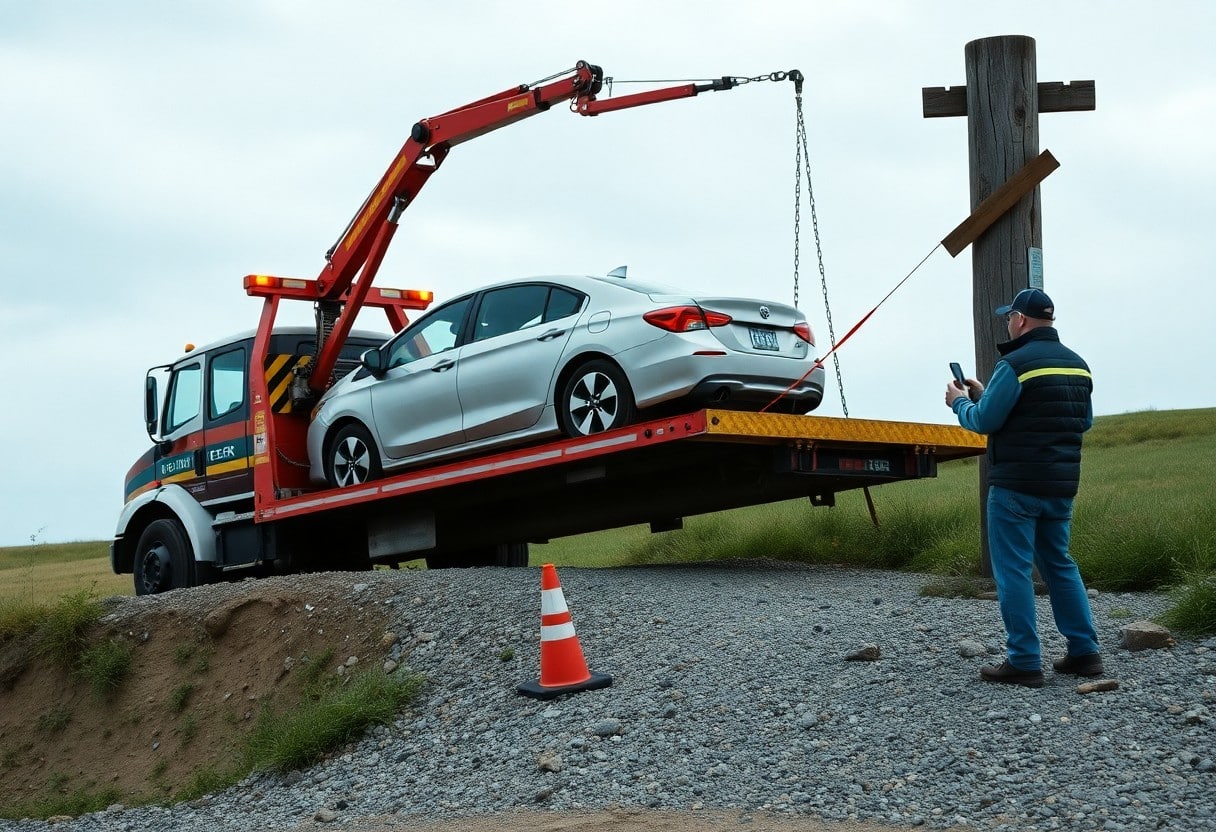
You can place snatch blocks to split the load or re-route lines, effectively halving tension and reducing strain on your winch. Anchor straps and rated shackles provide secure attachment points, and tag lines help you guide the vehicle. Check pulley alignment, cable wraps, and lubrication, and keep bystanders well clear during tensioned pulls.
Safety Protocols for Vehicle Extraction
Ensure you wear PPE, assess vehicle stability, and set the winch for a controlled pull. Assign clear signals, stabilize the vehicle with chocks or parking brake, and keep bystanders well back to prevent injury during extraction.
Identifying secure anchor points on the chassis
Inspect the frame rails, tow hooks, or designated recovery points for rust, deformation, or loose bolts before you attach lines. Use rated shackles, avoid suspension or body panels, and align your pull angle to reduce stress on anchors.
Maintaining a safe perimeter during the pull
Keep a clear perimeter, using cones or tape to mark danger zones and position spotters on both sides. You instruct everyone to stay behind barriers and off the winch line path until extraction is complete.
Position spotters at visible intervals, equip them with high-visibility vests and radios, and define escape routes in case a cable snaps or the load shifts. You cordon off at least twice the vehicle’s width plus the estimated recovery distance, control traffic with signs or officers, and require continuous verbal or radio confirmation before each incremental winch movement.
Selecting a Qualified Recovery Service in Anna
Inspect a company’s fleet, insurance, and reviews so you can confirm technicians skilled in winching and vehicle stabilization.
Verifying specialized recovery certifications
Confirm whether you see certifications for rope rescue, trench or ATV recovery, plus manufacturer training, to trust their technical competence.
Importance of 24/7 availability for emergency extraction
Expect a provider to offer 24/7 response so you avoid long waits that increase vehicle damage and personal risk during extraction.
Plan ahead by checking quoted response times, equipment lists, and recent customer experiences so you know how quickly and safely they will extract your vehicle at night or in remote spots.

Summing up
To wrap up, a towing service in Anna can assist with vehicle winching; you can expect trained technicians, proper equipment, and adherence to safety and local regulations, so you should confirm availability, pricing, and insurance coverage before service.
FAQ
Q: Can a towing service in Anna assist with vehicle winching?
A: Yes, many towing companies in Anna offer winching or recovery services for vehicles stuck in mud, snow, ditches, or on inclines. Tow trucks equipped with electric or hydraulic winches and recovery straps are used to pull vehicles to stable ground. Light-duty wreckers handle most cars and small trucks, while medium- and heavy-duty units are required for large SUVs, commercial trucks, or vehicles heavily lodged. Operators assess access, anchor points, and vehicle condition before beginning a pull to reduce risk of damage. Service availability can vary by company and time of day, so contacting a local dispatcher with details yields the fastest confirmation.
Q: What should I do at the scene while a tow operator winches my vehicle?
A: Follow the operator’s instructions and keep a safe distance behind any tensioned cable or strap. Turn off the vehicle, set the parking brake if instructed, and make the area visible with hazard lights or warning triangles. Do not stand near the cable, winch drum, or between vehicles while the winch is under load. Operators typically place a dampening blanket on the cable to reduce recoil risk and use rated recovery gear; letting them control the operation minimizes injury and vehicle damage.
Q: How much does winching cost in Anna and what affects the price?
A: Typical charges include a hookup or service fee plus either a per-mile tow rate or an hourly/recovery fee for winching. Simple pulls from a roadside may be inexpensive, while recoveries requiring extra equipment, long pulls, winching on unstable ground, or heavy-duty rigs increase the cost. After-hours calls, weekend or holiday service, and situations that require extra manpower or specialized gear will add surcharges. Request a price estimate before work begins and ask whether the quote covers possible additional expenses like vehicle extraction from private property.
Q: What information should I provide when calling a towing service in Anna for winching help?
A: Give your exact location or nearest cross streets, a description of the vehicle (make, model, year, front- or rear-wheel drive), how the vehicle is stuck (mud, snow, ditch, on its side), and whether the vehicle can be driven or has visible damage. Mention obstacles such as guardrails, trees, soft ground, or water, and tell the dispatcher if the scene is on private property. Inform the operator about accessibility for large tow trucks and whether you need immediate extraction or can wait for a scheduled recovery.
Q: When is winching not the right option and what are alternatives?
A: Winching is not appropriate if the vehicle is submerged in deep water, structurally unstable, severely damaged, or if the ground or surroundings make safe anchoring impossible. Severe rollovers, entrapment under objects, or hazardous material exposure require specialized emergency responders or heavy-recovery crews. Alternatives include flatbed towing after stabilizing the vehicle, calling a heavy-recovery service with cranes or rotators, or arranging vehicle transport to a repair facility once it is secured. The tow operator will advise the safest course based on site assessment.