Many drivers in Frisco encounter unexpected breakdowns; you should immediately steer your vehicle to the shoulder or a safe parking area, activate hazard lights, and set out emergency triangles if you have them. Call roadside assistance or a local tow, contact Frisco non-emergency police if you’re obstructing traffic, and keep your doors locked while you wait. Document the scene with photos, exchange information if another vehicle is involved, and notify your insurer promptly.
Key Takeaways:
- Ensure safety first: pull fully off the roadway, turn on hazard lights, set warning triangles or cones, and stay in the vehicle if traffic is heavy.
- Call 9-1-1 for injuries or immediate danger; contact Frisco Police non-emergency or TxDOT for disabled vehicles on highways or tollways.
- Use your roadside assistance or AAA and confirm the tow/repair ETA and destination; ask for the tow company’s name and plate before they arrive.
- Provide precise location details-cross streets, nearby landmarks, GPS coordinates, or highway/mile markers (US‑75, Sam Rayburn Tollway, Dallas North Tollway)-to speed response.
- If it’s safe, attempt simple fixes: change a flat with a spare or use a tire inflator, or jump-start a dead battery; keep doors locked and windows up while waiting.
Safety First
When your vehicle stalls on a Frisco roadway, move it out of traffic to the shoulder or a parking lot and aim for at least 15-30 feet from the nearest lane; this extra space reduces risk from passing cars. After stopping, set the parking brake, turn the wheels away from traffic on a slope, and keep passengers inside if the shoulder is wide and safe. If you detect fuel odor or smoke, evacuate everyone immediately and call 911.
Assessing Your Surroundings
Before you exit, scan for fast-moving traffic, uneven ground, loose gravel, and weather hazards like heavy rain or fog that can cut visibility below 500 feet. If you must leave the vehicle, face traffic and wear bright clothing or a reflective vest so drivers can spot you from at least 300 feet. Note nearby landmarks, mile markers, or cross streets to give precise location details to tow operators or responders.
Engaging Emergency Signals
Activate your hazard lights right away and use high-visibility warning devices; place one triangle or LED flare about 10-15 feet behind your vehicle, a second at 100 feet, and a third at 200 feet for highway stops. If you lack devices, switch on your dome light at night and use a flashlight to signal approaching drivers. Sound your horn briefly only if needed to alert immediate danger.
Flares burn hot and can ignite dry roadside vegetation common in North Texas, so prefer LED triangles or battery-powered flares when possible; properly placed reflective triangles can be seen by a driver at 55 mph from over 1,000 feet. Always deploy devices from the safest side of the vehicle while staying off the lane, and if conditions feel unsafe, keep hazards on and call a 24/7 tow or the Frisco Police non-emergency line for assistance.
Contacting Roadside Assistance
When you call or use an app, give your exact location (GPS coordinates, nearest cross streets like Preston Rd & Eldorado Pkwy, or a mile marker), a brief symptom summary, and whether anyone needs medical attention; many Frisco providers quote 15-45 minute arrival windows, stretching to 30-90 minutes in rush hour, so ask for an ETA and unit number, then stay a safe distance from traffic and keep your hazard lights on until help arrives.
Choosing a Service Provider
Use membership services (AAA, insurer-provided roadside), credit-card benefits, or vetted local towers; compare response times, flat-rate fees, and online reviews-many local tow companies operate 24/7 and list typical tow fees of $75-$150 within city limits; confirm the provider accepts your payment method, has proper licensing and insurance, and can handle specific needs like flatbeds for low-clearance or AWD vehicles.
What Information to Provide
State your precise location, vehicle year/make/model/color, license plate, the problem (won’t start, flat tire, dead battery, out of gas, smoke, fluid leak), number of occupants, any injuries, membership or account number, preferred tow destination, and payment method so dispatch can send the right equipment and estimate charges.
Provide a concise example when you call: “2016 Honda Civic, blue, plate ABC123, parked on Preston Rd at Eldorado Pkwy by the Shell, engine won’t turn over, one adult passenger, AAA member #12345, please tow to Smith’s Auto at 2100 Legacy Dr.” Including hybrid/AWD status or child/pet presence changes the truck type and speed of service.
Temporary Repairs
When a quick fix will get you to a shop, focus on stabilizing the problem: use a hose clamp or heavy-duty tape on a radiator leak to buy 10-30 minutes, apply tire sealant for punctures up to 1/4 inch (6 mm) so you can reach the nearest service center, and jump-start a dead battery with a 12V jumper or portable starter. Keep speeds low and monitor gauges while you drive to the repair facility.
Common Issues You Can Handle
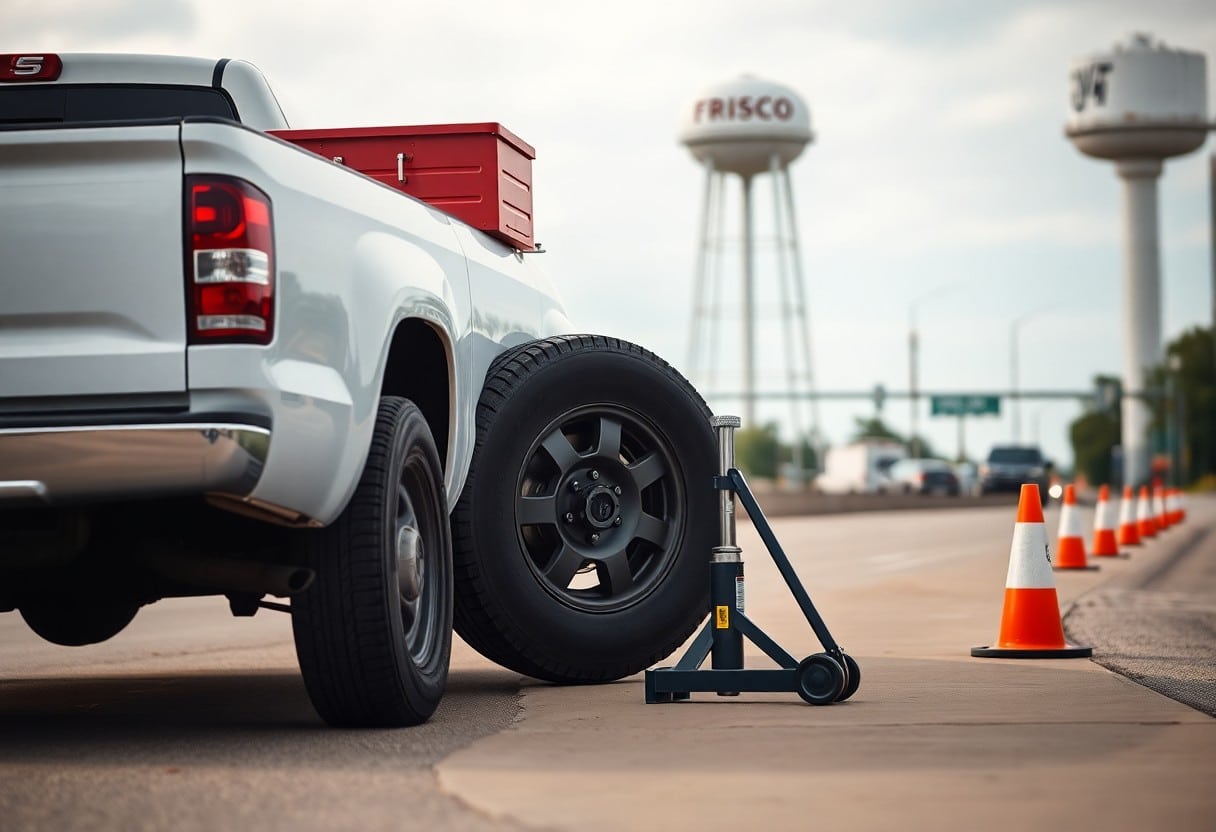
You can change a flat using your jack and lug wrench in 15-30 minutes if you have a spare, jump-start or use a 400-800A portable starter for dead batteries, swap a blown 5-20A fuse quickly, and tighten loose battery terminals or hose clamps to stop small leaks. Overheating is often eased by turning off the AC, running the heater to draw heat away from the engine, and adding coolant to the reservoir if accessible.
Tools and Supplies to Keep in Your Car
You should carry a jack rated for your vehicle, lug wrench, full-size spare or donut (check recommended PSI monthly), 12V portable jump starter (400-800A) or heavy-duty jumper cables (4-6 gauge, 10-12 ft), 12V tire inflator (up to 150 PSI), tire sealant, basic tool kit (screwdrivers, pliers, adjustable wrench), duct tape, zip ties, LED flashlight (200+ lumens), reflective vest and warning triangles, and a small first-aid kit.
Check your jump starter monthly and keep it charged, verify spare tire pressure at the vehicle-recommended PSI, store tools in a trunk organizer to prevent shifting, carry a labeled multi-size fuse pack (5-30A), replace used sealant after one use, and learn your vehicle’s jack points from the owner’s manual so you can change a tire confidently in under 30 minutes when needed.
Finding Local Support
Tap into local resources like AAA membership, Nextdoor groups, and Google Maps to locate immediate help; many Frisco tow or mobile mechanic services respond within 20-45 minutes during daytime. You should save three go-to numbers in your phone-one towing, one mobile mechanic, and your insurer-so you can compare ETA and cost quickly when you’re stranded.
Towing Services in Frisco, TX
Choose between 24/7 private towers and membership services; basic local tows in the area typically run $75-$125 for under 10 miles, while flatbed or long-distance tows cost more. If your vehicle is in a hazardous spot, call for a priority tow and confirm arrival time, hookup fees, and whether the company accepts credit or insurance billing before they begin.
Nearby Auto Repair Shops
Look up shops with ASE-certified technicians and recent five-star reviews to reduce risk of repeat visits; diagnostics often cost $80-$150, and chains versus independents differ on parts pricing and turnaround. You should call ahead to confirm parts availability, ask about warranty terms, and get a written estimate before authorizing work.
If you need faster service, prioritize shops offering same-day repairs-battery replacements can take 30-60 minutes, brake jobs 1-3 hours, and alternator or starter swaps usually require a day. Ask whether they use OEM or aftermarket parts, request estimated completion times in writing, and verify labor warranty (common terms are 12 months/12,000 miles) so you know what protections apply after the repair.
Staying Calm and Patient
When heat, rush-hour congestion or a stalled engine tests your nerves, staying composed helps you make safer decisions: turn on hazards, lock doors, and set your phone to share GPS coordinates with your tow service. Breathing steadily and following a short checklist reduces poor choices; if you or others face immediate danger call 911. Keeping calm also speeds communication-clear, specific updates (nearest cross street, mile marker, vehicle color) help roadside crews arrive faster in Frisco traffic patterns.
Managing Stress
You can lower adrenaline with simple, proven techniques: try box breathing (inhale 4 seconds, hold 4, exhale 4) for three rounds, or count slowly to 30 while scanning a short safety checklist. Shift focus to tasks-turning on hazards, noting landmarks, calling your insurer or tow-so your mind works on solutions. Using a timer or voice notes prevents repetitive worry and helps you convey clear information to responders.
Keeping Occupants Safe and Entertained
You should prioritize physical safety first-seatbelts on, children and pets away from traffic, windows up in extreme weather-then manage boredom: hand out bottled water, a snack, or a preloaded tablet with movies and headphones. Explaining timelines (e.g., tow ETA) calms kids and adults alike; if the wait extends beyond 30 minutes, rotate activities to keep everyone engaged and cooperative.
Pack items that make waits easier: a basic first-aid kit, a blanket, at least one 16-20 oz water bottle per person, nonperishable snacks, and a 10,000 mAh power bank that can charge most phones twice. For children, include quiet activity packs, crayons, and a downloaded movie; for pets, bring a leash and travel bowl. Keeping these supplies accessible in a labeled bag turns an uncomfortable delay into a manageable pause.
Preventive Measures for the Future
Schedule maintenance and set digital reminders: change your oil every 5,000-7,500 miles, rotate tires at 6,000-8,000 miles, and swap the air filter about every 12,000 miles. You should test the battery yearly since heat shortens life to roughly 3-5 years, and have brakes and belts inspected annually. Keep a simple service log (app or paper) so shops can see patterns and you can prove recent work when a warranty or recall applies.
Regular Maintenance Tips
Perform monthly and pre-trip checks so issues surface early:
- Oil & filter: every 5,000-7,500 miles
- Tires: check pressure monthly (32-36 psi) and rotate every 6,000-8,000 miles
- Battery: test annually; replace at 3-5 years
- Fluids: top off coolant, brake, washer, and transmission as needed
Recognizing warning sounds, slow starts, or dashboard alerts lets you book service before a roadside failure.
Emergency Preparedness
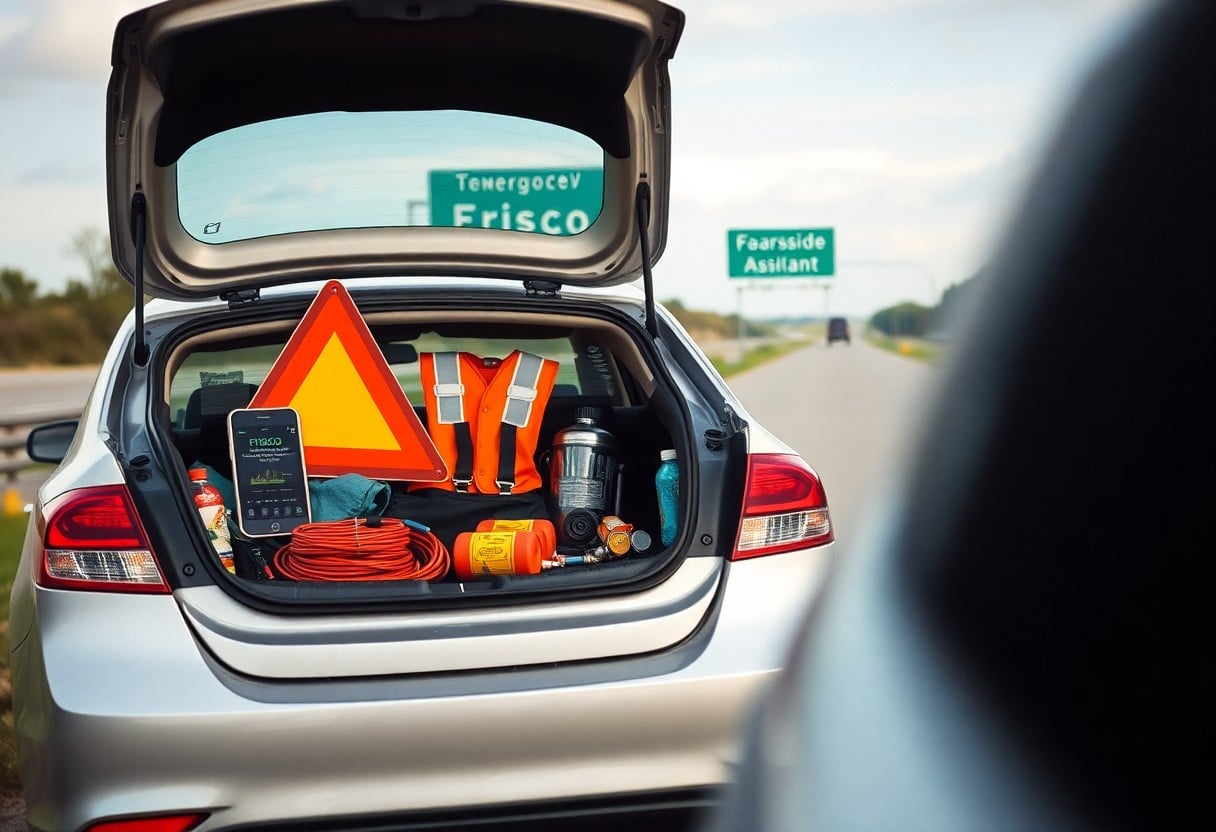
Keep an emergency kit in your trunk with two gallons of water, a flashlight and spare batteries, jumper cables, a fully inflated spare and jack, a 12‑volt portable air compressor, tire plug kit, reflective triangles, and a charged power bank. Store a printed copy of your insurance and roadside-assistance numbers and pin your location-sharing app for fast dispatch when you call for help.
Check and refresh the kit every six months: replace expired batteries, top off fluids, and verify the spare is at the manufacturer’s PSI. Practice changing a tire in a safe spot so you can do it in 20-30 minutes, and keep a laminated note with common Frisco cross streets or GPS coordinates to speed locating you during a tow or rescue.
Final Words
Drawing together the steps, you should secure your safety by pulling off the road, turning on hazards, and setting a warning triangle if available; contact emergency services for immediate danger, then call your roadside assistance or a tow, provide precise location and vehicle details, keep your phone charged and documents handy, and follow the technician’s guidance while documenting damage for insurance.
FAQ
Q: What are the first things I should do immediately after my car breaks down in Frisco, TX?
A: Stay calm and secure the scene. Turn on hazard lights, pull as far off the roadway as safely possible, set the parking brake and turn off the engine. If you are on a busy road or feel threatened, call 911. If you can exit safely, move well away from traffic and stand behind a guardrail or a safe barrier. If the vehicle must remain in the lane, keep your seatbelt fastened and wait for help.
Q: How can I safely move my vehicle to the shoulder or an exit?
A: Signal early, check mirrors and blind spots, and accelerate gently to a safe speed for merging to the shoulder. Use hazards while moving and choose a flat, visible spot away from curves or hills. If the car won’t move, leave it in gear or park and use warning devices (hazard lights, cones, reflective triangles) if available. Avoid crossing medians or unprotected areas; if unsure, stay inside until professional help arrives.
Q: How do I get reliable roadside assistance or a tow in Frisco?
A: Call your insurer’s roadside service or a membership service (AAA) if you have one, or search for local towing companies via maps/apps and check ratings. Provide exact location (cross streets, mile marker, or GPS coordinates), vehicle year/make/model, license plate, and a description of the problem. Ask for an estimated arrival time, the type of tow (flatbed vs wheel-lift), and an upfront estimate of fees. If you feel unsafe, notify 911 or Frisco police non-emergency for assistance with location and safety.
Q: Can I perform temporary repairs myself (flat tire, dead battery, empty gas tank)?
A: You can do basic, safe fixes if you have the proper tools and a secure location. For a flat: engage the parking brake, use wheel chocks, jack on solid ground, swap to the spare and tighten lug nuts in a star pattern. For a dead battery: use jumper cables or a jump pack-connect positive to positive and negative to a metal ground on the dead car; start donor car, then the dead car, and remove cables in reverse order. For no fuel: request a fuel delivery service rather than siphoning. Do not attempt complex engine repairs on the roadside; call a tow if the fix is beyond your skills.
Q: What safety steps should I take while waiting for help, especially at night or on busy roads?
A: Make yourself visible and safe: keep hazard lights on, use a flashlight or phone light, and wear reflective clothing if you must exit. Stay away from traffic-stand behind barriers or well off the shoulder. Lock doors if staying inside, and share your live location with a trusted contact. Avoid accepting rides or help from strangers; if someone offers assistance, ask them to call a tow or wait until official help arrives. Document the scene with photos if it’s safe to do so for insurance purposes.