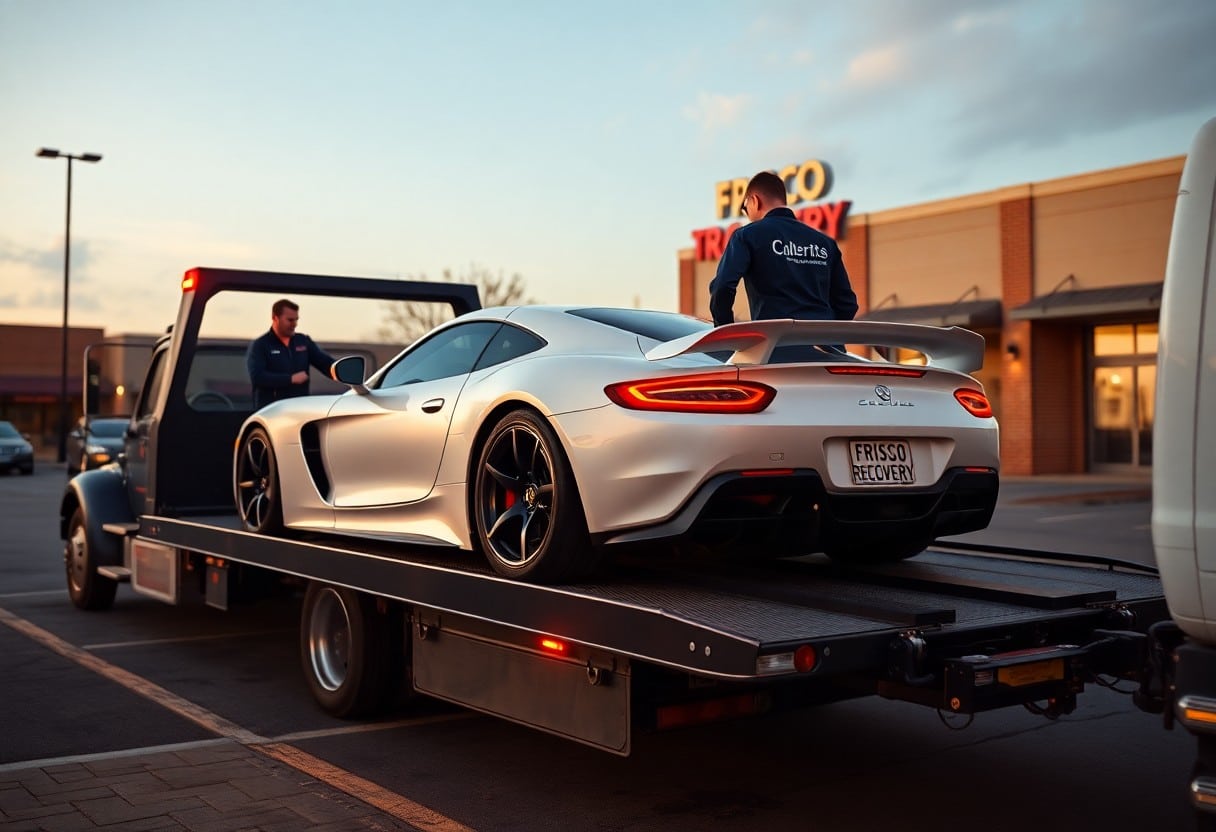
Just because your luxury or low-clearance vehicle requires special care doesn’t mean you must worry; many Frisco towing companies offer specialized flatbed trucks, soft straps, and trained operators to protect paint, suspension, and low bumpers. You should verify equipment, insurance coverage, and technician experience before dispatch, and ask for low-profile dollies or flatbeds to ensure safe, damage-free transport when roadside assistance is needed.
Key Takeaways:
- Many Frisco towing companies have flatbeds and low-profile wheel-lift adapters designed for luxury and low-clearance vehicles.
- Enclosed carriers and soft-strap methods are commonly offered for high-end cars to minimize risk of damage and exposure.
- Call ahead and disclose low clearance, aftermarket modifications, or rare models so the provider brings appropriate equipment and trained staff.
- Verify insurance, damage policies, and specific experience with exotic or low-clearance vehicles before authorizing a tow.
- Some locations may be inaccessible to standard equipment; expect possible extra fees or alternative pickup arrangements requiring specialist service.
Overview of Towing Services in Frisco
Across Frisco, towing providers operate 24/7 and commonly offer flatbed, wheel‑lift, and low‑profile dollies to handle varied vehicle needs; you can expect urban response times typically between 15-30 minutes and licensed operators who carry liability insurance. Many firms advertise specialty rigs for high-end cars and low‑clearance sports cars, and several local shops publish capacity limits (up to 20,000 lbs) so you can choose a provider based on your vehicle’s weight and clearance.
Types of Vehicles Towed
You’ll encounter providers routinely towing luxury sedans, low‑clearance sports cars, SUVs and pickups, motorcycles, and classic/collector vehicles with tailored equipment and handling protocols. Operators often specify whether they use full flatbeds, low‑angle trailers, or wheel‑lift with soft straps to protect finishes; some shops even maintain manufacturer‑approved tie‑down procedures for Ferraris or Porsches. Assume that flatbed towing is the preferred method for minimizing chassis and drivetrain risk.
- Luxury sedans (Mercedes, BMW, Lexus)
- Low‑clearance sports cars (Porsche 911, Ferrari)
- SUVs and pickups
- Motorcycles and scooters
- Classic and collector cars
| Luxury sedans | Flatbed with soft straps and factory tie‑point use |
| Low‑clearance sports cars | Low‑angle flatbeds or slide‑beds to avoid scraping |
| SUVs and pickups | Wheel‑lift or flatbed depending on weight and drive‑train |
| Motorcycles | Cradle or dedicated motorcycle trailer with chocks |
| Classic/collector cars | Flatbed, climate‑aware handling, and documented chain points |
Importance of Professional Towing
You benefit when a trained operator handles your vehicle: certified technicians use proper tie‑downs, know manufacturer towing modes (important for automatics and EVs), and carry insurance that protects you financially if damage occurs. Local Frisco companies often log vehicle condition photos and timestamps, which helps for claims; typical light‑duty tow rates in the region commonly start around $75-$125 plus per‑mile fees, so verify estimates before release.
Professional crews also reduce repair bills by preventing common mistakes-using soft straps instead of chains, setting steering locks correctly, and deploying low‑angle decks for low‑clearance cars. You should confirm equipment capacity (weight rating) and ask whether the provider has handled your specific make or model recently to ensure they follow manufacturer guidelines.
Challenges of Towing Luxury Vehicles
Towing luxury cars presents tight tolerances: ground clearance often falls under 100 mm (4 in) and curb weights range from 1,800-2,500 kg (4,000-5,500 lb), so a wrong lift point or strap can dent carbon‑fiber splitters or damage adaptive suspension. You will need carriers that account for underbody sensors, flush bumpers, and fragile alloys; many Frisco operators report 15-20% longer prep times for luxury jobs because of these extra precautions.
Specialized Equipment Required
You’ll see flatbeds (20-24 ft) with hydraulic tilt and winches, low‑profile dollies offering 2-3 in decks for undercarriage clearance, and axle cradles or soft‑strap wheel nets to protect rims. Operators often use battery isolators and portable ramps to prevent electronic faults, plus airbag lifting systems for cars with active suspensions. Flatbed capacity should match vehicle weight – many light‑duty rigs handle 7,000-10,000 lb, while heavy‑duty units exceed 15,000 lb.
Training and Expertise of Operators
You should verify operators hold training such as WreckMaster certification or TRAA‑aligned courses and have completed 40-80 hours of hands‑on instruction plus classroom safety modules. Practical experience matters: technicians who’ve performed 100+ luxury tows know vehicle‑specific quirks like Porsche front lifts or Tesla transport modes and reduce risk by following manufacturer tow procedures.
You’ll want an operator who uses a 10-15 point pre‑tow inspection, documents VIN and photos, and confirms OEM tow points and battery isolation before loading. Many certified teams train to manage air suspension: they either set “transport mode” or carefully lower pressure and employ airbag jacks to avoid chassis contact. In Frisco case logs, teams that followed these steps reduced post‑tow damage claims by over 60%.
Handling Low Clearance Vehicles
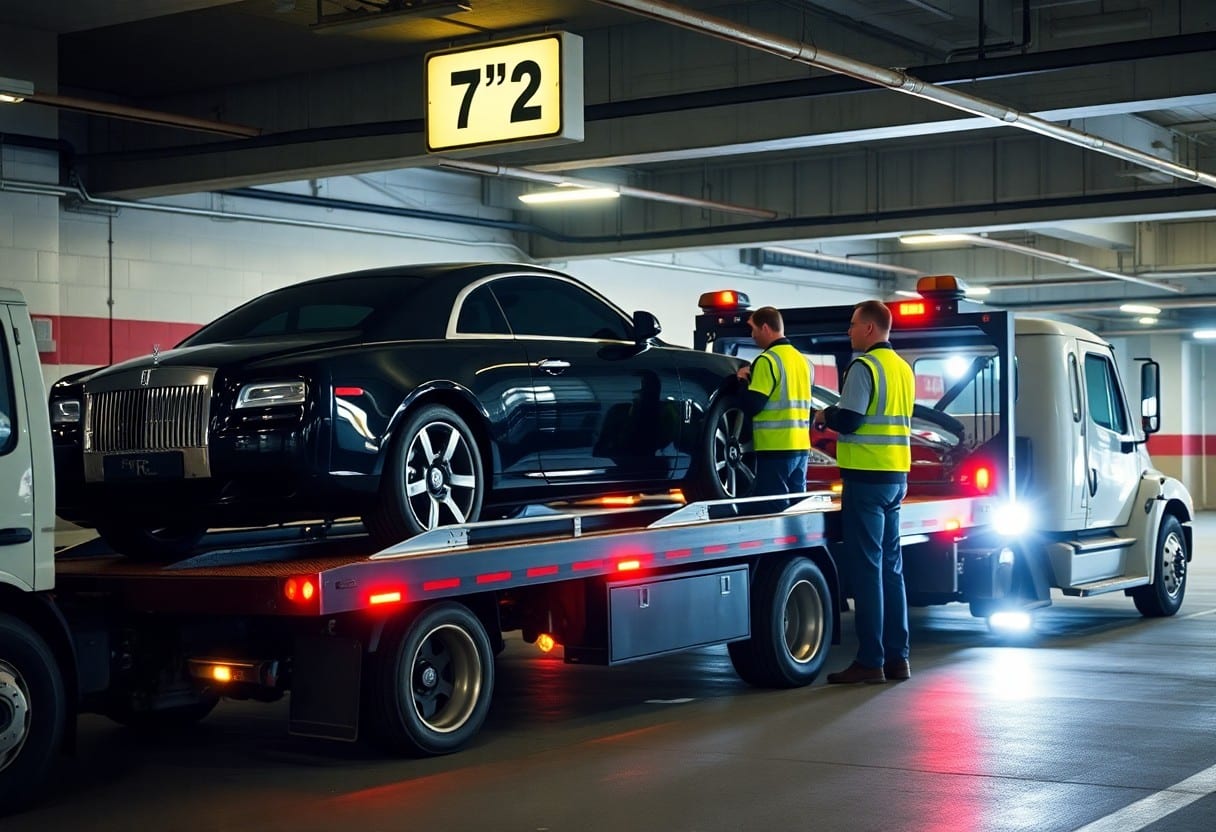
Many performance and modified cars sit 3-5 inches off the road-Ferrari 488≈4.3″, Lamborghini Huracán≈4.1″, Tesla Model S≈4.6″-so you should expect tailored loading methods. In Frisco, crews use low-angle approaches, slide-bed flatbeds and dollies to avoid bumper and splitter damage; a recent local tow reduced bed angle to 6° to safely load a Porsche with 3.9″ clearance, preventing scraping and insurance claims.
Techniques for Safe Towing
You want technicians to use a sequence: assess ground clearance, lower the flatbed to minimum angle, attach a soft winch strap to a designated recovery point, and slowly winch at 1-3 ft/min while guiding wheels onto the bed or dollies. Teams typically secure the vehicle with 2-4 straps rated 2,000-5,000 lb and check tie-down geometry to avoid axle load shifts during transport.
Equipment Options for Low Clearance
You should expect flatbeds with hydraulic slide/tilt systems, low-profile wheel dollies, airbag jacks, skates and underlift adapters. Common capacities: flatbeds 5,000-12,000 lb, winches 3,000-8,000 lb, dollies 2,000-3,500 lb per axle. Choice depends on clearance, curb weight and vehicle attachment points.
When clearance is under 4″, airbags can raise the chassis 3-6 inches to allow dolly placement, while slide-bed trucks can lower bed angle to under 10° for gentle loading. For one Frisco recovery, airbags lifted a Cayman 4″ so a low-profile dolly could be rolled under; crews then used soft-wheel nets and padded straps to protect paint and aero components for the 25-mile tow.
Towing Regulations and Compliance in Frisco
Municipal and state rules determine how your luxury or low-clearance vehicle must be handled, from required equipment to reporting after an impound. You should expect tow operators to use flatbeds or specialty low-profile dollies for cars under 4-5 inches of clearance, document pre-tow condition with photos, and follow Frisco Police impound procedures when applicable; noncompliance can lead to fines or liability claims, so verify the company’s practices before authorizing a tow.
Local Ordinances
City ordinances typically govern private-property towing, signage, and impound lot operations; you’ll commonly see requirements for visible “towing enforced” signs and posted fee schedules at lots. In Frisco, the police department coordinates releases and public notices for towed vehicles, so check the city’s website or call dispatch to confirm where your vehicle will be stored and what paperwork you’ll need for retrieval.
Licensing and Insurance Requirements
You should confirm the tow company holds appropriate licenses and commercial insurance-commercial auto liability and garage-keeper’s coverage are standard-and ask for policy limits and expiration dates. Reputable operators also carry workers’ comp and motor-vehicle towing endorsements; lack of proper coverage shifts risk to you if damage occurs during transport, so always request a certificate of insurance before service.
For deeper verification, request the company’s DOT or state motor carrier number, a certificate of insurance listing coverage types and limits (common liability ranges: $100,000-$1,000,000), and proof that their flatbeds are rated for your vehicle’s gross weight-many flatbeds handle 8,000-12,000 lbs. Ask for a written estimate and a photographed pre-tow condition report; if you have a high-value car (for example, a 4,500 lb luxury sedan), those documents and insurance details protect you in any damage claim.
Customer Considerations
When you arrange a tow for a luxury or low‑clearance car, verify operator equipment-flatbeds, low‑profile wheel lifts, soft‑strap kits-and experience with vehicles under 100 mm (4 in) ground clearance. Ask about winch capacity (≥5,000 lb), loading angle (ideally <5°), and whether they follow manufacturer‑specified lift points; expect specialty handling to add 15-45 minutes to a standard tow and shop at least two quotes before authorizing service.
Cost Factors
Rates vary by service: flatbed hook‑up commonly runs $125-$250 plus $2-$4 per mile, while specialized low‑profile adapters or winching add fees. Typical additional charges include:
- Flatbed towing: $125-$250 hook + $2-$4/mi
- Low‑profile adapters/soft straps: $50-$150 extra
- After‑hours/holiday surcharges: +25-50%
Perceiving higher costs as investment in damage prevention helps justify choosing experienced vendors.
Choosing the Right Towing Company
You should select a provider that publishes manufacturer‑approved handling procedures, carries commercial auto liability (≥$1M), and demonstrates flatbed equipment with ≤5° loading solutions; many Frisco companies advertise 24/7 response windows of 20-30 minutes, but confirm on‑site photos and written estimates before authorizing the tow.
When you call, ask for VIN‑specific procedures, a list of equipment (flatbed length ≥20 ft, low‑profile ramps, wheel dollies rated per axle), technician certifications, and itemized pricing; if you own a Ferrari 488 (≈1,475 kg) or Porsche 911 (≈3,300 lb curb), require proof that winch/dolly capacities exceed vehicle weight and that tie‑down points will be used as directed.
Frequently Asked Questions
Common concerns focus on damage risk, cost, and response time: flatbed towing is the preferred method for vehicles with 3-5″ ride height, local Frisco flatbed tows typically range $150-$350 depending on distance and access, while quick wheel-lift jobs may be $75-$125. You should verify that the company uses soft straps, wheel chocks, low-angle ramps, and has technicians trained on high-end marques before authorizing the tow.
Common Concerns About Towing Luxury Cars
You worry about body panels, suspended spoilers, and drivetrain systems – which is why professionals avoid wheel lifts for most exotics. Frisco tow operators trained on Ferraris, Lamborghinis, and Teslas use flatbeds, manufacturer tie points, padded straps, and steering locks to prevent scrapes, transmission drag, and electrical faults during transport.
Tips for Vehicle Owners
When you call, provide make/model, exact ride height (e.g., 3-5″), presence of air suspension or aftermarket skirts, and request a flatbed with a low-angle ramp. Photograph your car, confirm insurance and a written estimate, and ask if the crew carries dollies for ground-clearance issues; avoid having the battery isolated unless instructed by the technician.
- Share precise vehicle data: year, trim, lowered suspension kit, and ground clearance measurements.
- Ask for flatbed trucks with low-angle ramps, wheel chocks, and soft straps for painted surfaces.
- Confirm the tow company’s experience with prestige brands and request technician certifications if available.
- After you authorize service, get the technician’s ETA, truck unit number, and an itemized estimate in writing.
For cars with air suspension, adaptive damping, or carbon components, tell the dispatcher specifics so the crew can set service modes or avoid wheel lifts; air systems often change ride height by 1-3″ when adjusted. You should remove or secure detachable aero pieces when possible, document pre-tow condition with time-stamped photos, and verify whether low-profile dollies will be used for partial lifts to protect forged wheels and side skirts.
- Fold mirrors, disable alarms, and secure loose trim before arrival to reduce loading complications.
- Provide an accessible key or remote to the driver if you cannot follow the tow and note VIN and mileage for records.
- Request written handling, storage, and liability terms before the tow begins.
- After the tow, inspect underbody, suspension mounts, and bodywork within 24 hours and report any issues promptly.
Summing up
With this in mind, when you need your luxury or low-clearance vehicle towed in Frisco, choose companies that advertise flatbeds, low-profile hydraulic lifts, air-ride trailers and technicians trained in exotic cars; verify insurance, confirm clear pricing and scheduling, and ask for pre-tow protection procedures so your vehicle’s finish and undercarriage are safeguarded-reputable local firms routinely handle these cars when you provide advance notice and specific instructions.
FAQ
Q: Do towing companies in Frisco handle luxury and low clearance vehicles?
A: Many towing companies in Frisco do handle luxury and low clearance vehicles, but not all are equipped or trained. Companies that specialize in high-end or modified cars typically offer flatbed trucks, low-profile trailers, air-ride carriers, and trained operators who know how to avoid body damage, undercarriage contact, and driveline stress. Always confirm equipment and experience before dispatch.
Q: Which towing methods are safest for luxury and low-clearance cars?
A: Flatbed transport is the safest and most common method because it keeps the vehicle off the ground. Low-profile flatbeds, removable ramps, and specialized dollies for low clearance can reduce ramp angle. Wheel-lift or tow-bar towing is acceptable only when adapters, wheel nets, and experienced operators are used and when the vehicle’s driveline and clearance permit. Avoid hook-and-chain towing for vehicles with low ground clearance or soft body panels.
Q: How should I prepare my luxury or low-clearance vehicle before the tow truck arrives?
A: Photograph all sides of the vehicle for condition documentation. Secure or remove loose exterior accessories, fold mirrors, and note aftermarket aero parts or lowered suspension. Provide the operator with the vehicle key and inform them of towing restrictions (AWD/4WD, locked differentials, aftermarket suspension). If instructed by the towing company, set the transmission to neutral and disable alarms; otherwise follow the operator’s directions to prevent damage.
Q: Will towing a luxury or low-clearance vehicle cost more than a standard tow?
A: Typically yes. Specialized equipment, extra time to load carefully, skilled operators, and additional insurance or damage waivers increase cost. Expect higher base rates or minimums, added charges for winching, long-distance flatbed transport, after-hours service, and any special handling. Ask for an estimate upfront and clarify liability limits and insurance coverage.
Q: How do I find and verify Frisco towing companies that can handle luxury and low-clearance vehicles?
A: Search for companies that advertise “flatbed,” “low-profile,” “air-ride,” or “luxury vehicle transport.” Ask specific questions: Do you have low-angle ramps or removable ramps? Are technicians trained on luxury brands and lowered suspensions? Request proof of insurance, written estimates, references or online reviews, and photos of the exact equipment that will be used. Confirm damage policies and, if possible, choose a company that offers on-site assessment before loading.