Most drivers in Lucas pay $75-$150 for a local tow; you can expect higher fees for long-distance, heavy-duty, or after-hours service, with flat hookup charges plus per-mile rates affecting the final bill.
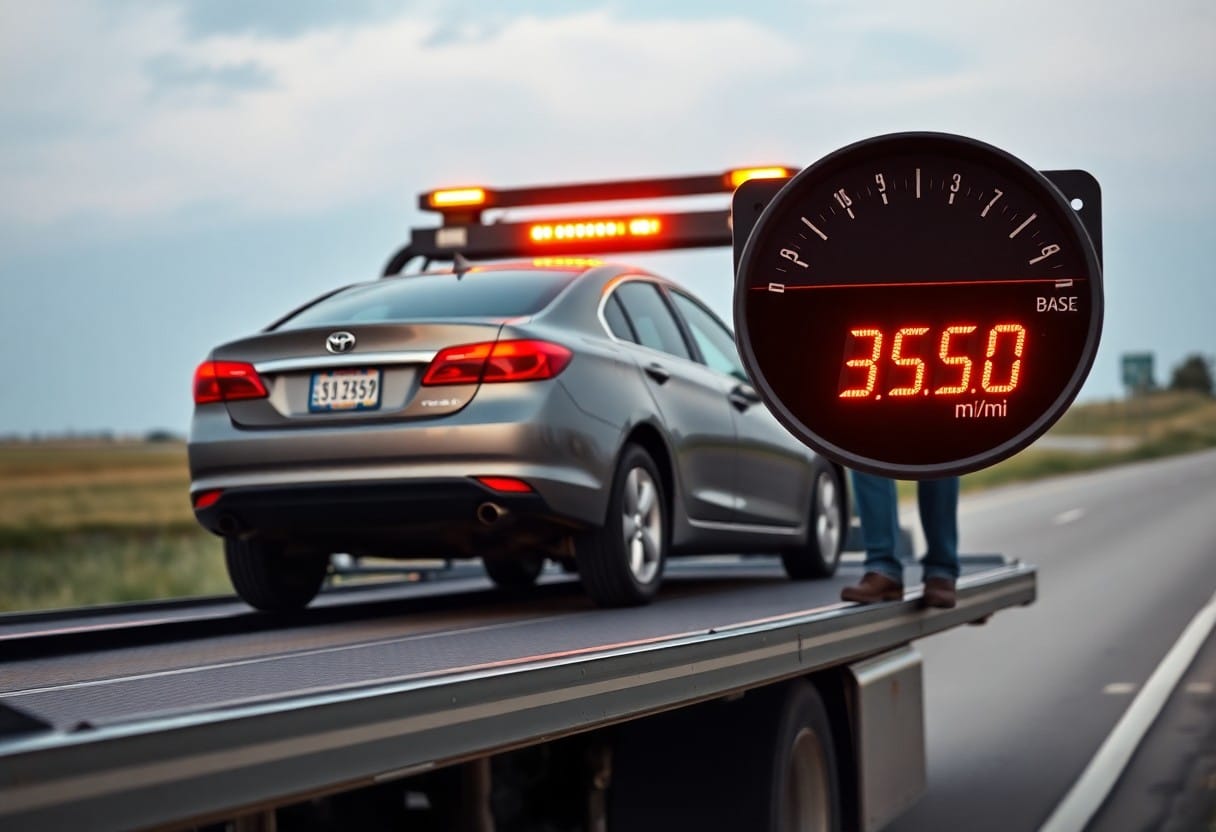
Primary Factors Influencing Towing Rates in Lucas
Several factors affect what you pay for towing in Lucas:
- Time of day
- Vehicle size and weight
- Service complexity
Recognizing these variables helps you estimate costs before calling a tow.
Base Hook-up Fees and Connection Charges
Hook-up fees typically form the initial charge you pay, covering winch or lift connection plus basic administrative costs; distance and vehicle prep can increase that fee.
Per-Mile Rates for Local vs. Long-Distance Transport
Rates per mile are lower for local hauls, while long-distance trips raise your cost because of fuel, driver time, and return-trip logistics.
Vehicle weight, required permits for oversized loads, and tolls increase per-mile charges on long hauls; you should ask for an itemized per-mile breakdown, any minimums, and whether return mileage is billed.
Vehicle Classification and Equipment Requirements
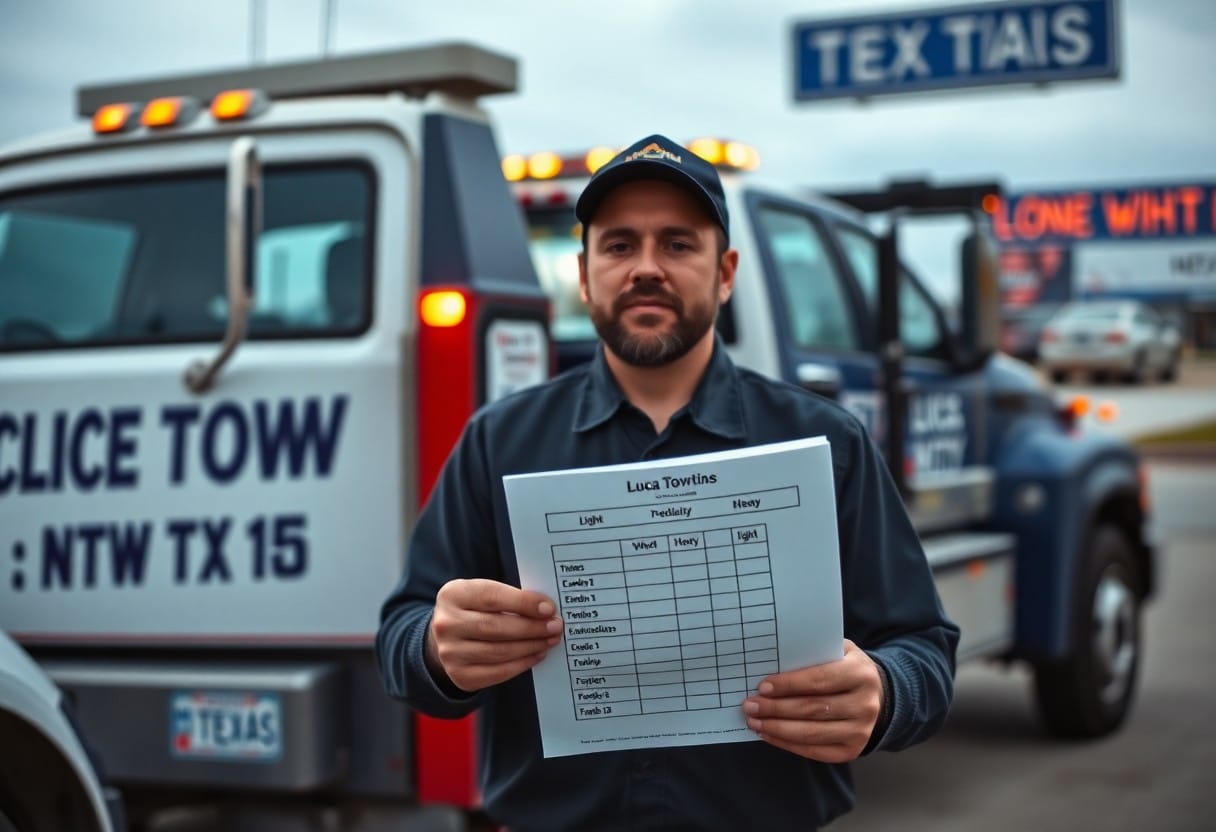
Vehicle classification determines base towing rates and equipment needs; you should expect higher fees for heavy-duty setups, winches, or rotator trucks compared to standard passenger tows.
Standard Passenger Vehicle vs. Heavy-Duty Towing
Standard passenger tows usually cost less and use light-duty trucks; heavy-duty jobs need larger rigs, increased per-mile charges, higher hookup fees, and more labor that you will pay.
Flatbed Requirements for Luxury or All-Wheel Drive Cars
Flatbed transports protect drivetrains and bodywork; you should expect flat-rate minimums plus extra for wheel cradles, soft straps, and careful loading on luxury or AWD vehicles.
When hauling luxury or AWD cars, you should require low-angle flatbeds, winch-assisted loading, dedicated wheel cradles, and paint-safe straps; technicians may charge extra time, specialized equipment fees, and higher insurance limits reflected in the final quote.
Emergency and After-Hours Service Premiums
Expect higher rates for emergency and after-hours towing in Lucas, TX; you’ll often pay surcharges for calls outside regular business hours, plus extra per-mile and hookup fees when roads are closed or crews are diverted.
Night, Weekend, and Holiday Surcharges
Nighttime, weekend and holiday calls carry surcharges you’ll see on the invoice, usually a flat fee or a percentage of the base tow, and sometimes a higher per-mile rate for late or holiday responses.
Accident Scene Recovery and Specialized Cleanup Fees
Accident scenes involving hazards or heavy damage often incur specialized recovery and cleanup fees you will be charged to cover labor, materials, and disposal.
You can expect itemized charges for hazardous-material containment, absorbents and biohazard disposal, extended recovery time, heavy-equipment rental, traffic control, and required permits; crews may bill hourly plus flat cleanup costs, so ask for an estimate and photos for insurer claims.
Roadside Assistance vs. Full Recovery Costs
Costs in Lucas vary: routine roadside assistance like tire changes, jump-starts, and lockouts often costs $50-$150, while full recovery or off-road towing can run $150-$500+ depending on distance, difficulty, and time of day. You should factor in labor, equipment, and extra fees for emergency or long-haul services.
Flat Tire, Battery Jump-start, and Lockout Services
Basic services like a flat tire change, battery jump-start, or lockout typically cost $25-$75 on-site; if you have roadside membership, you may pay less. You should expect small travel and service fees and faster response for local calls.
Winching Services for Off-Road or Mud Recovery
Remote winching for off-road or mud recovery is more expensive, commonly $150-$400+, because technicians need specialized gear and extra time; you should expect higher charges for deep mud, multiple pulls, or unstable terrain.
Expect final cost to hinge on vehicle weight, how deep it’s stuck, the number of technicians required, and whether a tow is needed afterward; night calls, long drives to remote sites, or complex recoveries can add hourly labor, heavy-duty equipment fees, and safety rigging charges-check your coverage and get an itemized estimate.
Regional Regulations and Consumer Protections
Local rules set towing fees, dispute processes, and notice requirements you should expect after a tow in Lucas. You can use county and state resources to contest improper charges quickly.
Collin County Towing Ordinances and Fee Caps
Collin County limits certain nonconsensual tow rates and mandates clear signage so you can assess whether fees comply. You should check county ordinances and impound procedures before paying or filing a complaint.
Verifying Licensed and Insured Operators in North Texas
Verify licenses and insurance before authorizing a tow so you can avoid unregistered operators and hold companies accountable for damage or overcharges.
Request written proof of company registration, operator ID, and current insurance before payment; take photos of your vehicle and the scene, keep receipts, and note tow truck numbers. You can confirm credentials via state or county online registries and report violations to local consumer protection offices or law enforcement.
Strategies to Manage and Reduce Towing Expenses
Strategies that cut towing costs in Lucas focus on planning, using memberships, and picking local towers so you avoid long deadhead charges.
Utilizing Insurance and Roadside Assistance Memberships
You should verify tow coverage, confirm dispatch billing, and call your roadside-assistance provider before accepting pay-now rates to reduce out-of-pocket costs.
Selecting Local Lucas Providers to Minimize Deadhead Mileage
Choosing local Lucas towers limits deadhead mileage, so you can often secure lower base and per-mile fees when you ask where the truck is located.
Compare quotes from multiple Lucas-area towers and ask each for base rate, per-mile charge, after-hours and hookup fees, and whether deadhead is billed from within Lucas or from a distant dispatch. Confirm the truck’s home location, estimated arrival, and whether they offer direct billing to your insurer. Check online reviews and local business listings, prioritize companies with local lots, and request an itemized estimate so you can challenge unexpected line items.
Summing up
As a reminder, towing in Lucas, TX commonly runs $75-$150 for local tows and about $2-$4 per mile for longer pulls; you should confirm flat fees, after-hours and winch or vehicle-size surcharges and get an upfront estimate before authorizing service.
FAQ
Q: What is the average cost for a standard tow in Lucas, TX?
A: Typical local light-duty tow within Lucas runs $75-$150 total, which usually includes a hookup/dispatch fee of $60-$100 plus $3.50-$6.00 per mile. Flatbed tows for vehicles that cannot be towed on a dolly commonly start higher, often $100-$200 for hookup and $4-$7 per mile. Long-distance tows beyond 20-30 miles are often billed per mile or offered as a flat rate, with total costs frequently landing between $150 and $500 or more depending on distance and vehicle type.
Q: Which factors most influence towing prices in Lucas, TX?
A: Vehicle size and weight directly affect the equipment required and the price. Distance between pickup and drop-off determines the mileage portion of the bill. Type of tow required (flatbed, dolly, wheel-lift, heavy-duty) changes labor and equipment costs. Time and day of service matter; late-night, weekend, and holiday calls usually carry higher rates. Location and accessibility at the scene, such as off-road recovery, gated communities, or steep driveways, can add labor and winch charges. Additional services like winch-outs, jump starts, fuel delivery, or vehicle storage add separate fees.
Q: How much extra do flatbed, heavy-duty, and specialty tows cost compared with a standard tow?
A: Flatbed tows for cars generally cost $95-$200 hookup plus $4-$7 per mile because loading and securing on a flatbed requires more time and equipment. Heavy-duty tows for RVs, buses, or commercial trucks typically start $150-$400 for hookup and can be $6-$12 per mile or higher, depending on axle count and special equipment. Motorcycle tows are usually less expensive, commonly $50-$100 for hookup and $2.50-$4.00 per mile. Specialty recoveries like rollovers or multi-vehicle incidents may require crane or extra personnel and be quoted case-by-case.
Q: What additional fees should I expect beyond hookup and per-mile charges?
A: After-hours, weekend, and holiday surcharges often add $20-$75 to the bill. Winch-out or recovery fees typically range $75-$200 depending on difficulty. Storage or impound fees at the tow yard commonly run $20-$40 per day. Vehicle release or administrative fees can add $25-$150 if paperwork, lien searches, or impound processing are required. Fuel surcharges, environmental cleanup fees for fluid leaks, and mileage minimums (often 5-10 miles) are also common on some invoices.
Q: How can I get an accurate towing estimate and will my insurance cover it?
A: Call local tow companies and provide exact pickup and drop-off addresses, vehicle make/model and condition, and whether the vehicle is operable to get a written or verbal estimate that itemizes hookup, per-mile rate, and any additional fees. Ask whether the company charges mileage minimums, after-hours surcharges, winch fees, and storage rates before authorizing service. Roadside assistance plans, credit card benefits, and some auto insurance policies may cover towing or reimburse costs; confirm coverage limits, preferred-provider rules, and whether prior authorization is required. Keep receipts and request a detailed invoice if you plan to file a claim or seek reimbursement.