
Plano towing companies commonly offer flatbed towing, giving you safer, damage-free transport for all-wheel-drive, low-clearance, or specialty vehicles while technicians secure your car for long-distance or recovery moves.
The Mechanics and Advantages of Flatbed Towing
Flatbed towing uses a hydraulically tilting platform that slides to the ground so you avoid driving a vehicle onto the bed; it protects wheels, suspensions, and electronics better than dollies or hook towing.
Design Features of Modern Flatbed Trucks
Several modern flatbeds have integrated winches, low-angle ramps, adjustable tie-down points, and air-ride suspension so you can secure varied vehicles without added stress.
Why Flatbed is Preferred for Damage Prevention
You choose flatbed towing when avoiding contact with the road matters, as it keeps the entire vehicle off the pavement and minimizes movement during transport.
When you require total protection, flatbed trucks allow you to load a vehicle without compressing its suspension, use multiple anchor points to prevent shifting, and benefit from air-ride systems that reduce vibration-together these features lower the risk of body, drivetrain, and alignment damage compared with wheel-lift or tow-bar methods.
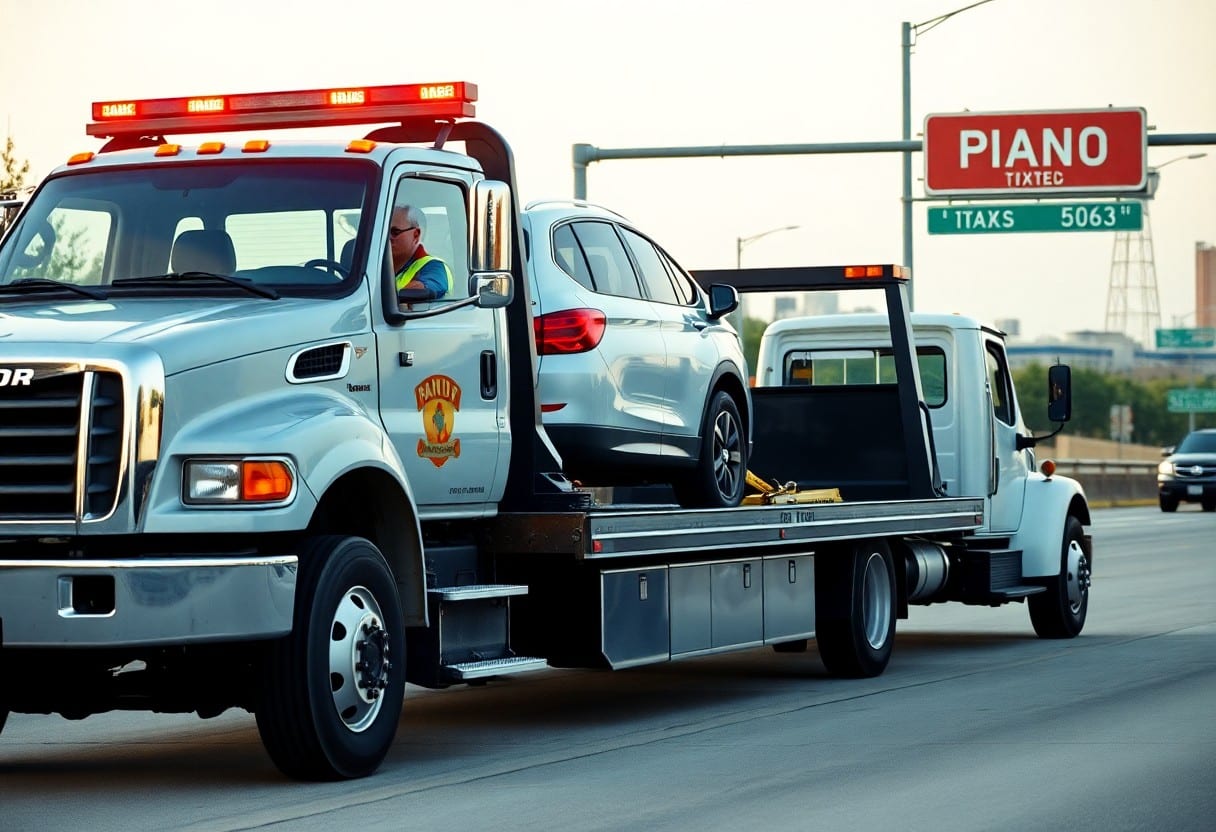
Availability of Flatbed Towing in Plano
Plano offers numerous towing companies that provide flatbed towing; you can check provider websites, customer reviews, and call dispatch to confirm equipment availability and advertised rates.
Assessing Local Fleet Capabilities
Check each company’s fleet details so you know if they handle oversized or luxury vehicles; you should verify tow capacity, flatbed length, and operator certifications before booking.
On-Demand vs. Scheduled Flatbed Services
Compare on-demand options for emergencies with scheduled flatbed services for planned moves; you can expect higher immediate rates but faster response times for on-demand calls.
Deciding between on-demand and scheduled flatbed towing depends on urgency and budget; you should weigh response windows, confirmed arrival times, and potential standby fees to choose the best fit.
Vehicle Types Requiring Flatbed Transport
Certain vehicles-motorcycles, wrecked cars, EVs, and low-clearance vehicles-need flatbed transport to prevent further damage, so you should request flatbed towing in Plano when handling these types.
| All-Wheel/Four-Wheel Drive | Protects drivetrain and transfer case from towing stress |
| Electric Vehicles | Avoids dragging that can harm batteries and underbody |
| Motorcycles | Secures upright transport to prevent tip-over and scrapes |
| Lowered Vehicles | Prevents bumper and undercarriage scraping during loading |
| Luxury & Classic Cars | Maintains finish and suspension with careful loading |
- All-wheel and four-wheel drive vehicles
- Electric vehicles (EVs)
- Motorcycles
- Lowered vehicles
- Luxury and classic cars
All-Wheel Drive and Four-Wheel Drive Systems
All-wheel and four-wheel drive vehicles risk drivetrain damage if towed improperly, so you should insist on flatbed transport to avoid stress on transfer cases and differentials during recovery or transport.
Luxury, Classic, and Lowered Vehicles
Premium, classic, and lowered cars face increased risk of scrapes and suspension harm with conventional towing, so you should opt for flatbeds-ideally enclosed-to preserve finish and ride height.
Owners of high-value or historically significant cars expect careful handling, and you should confirm the tow provider uses soft straps, wheel chocks, air-ride or hydraulic beds, and manufacturer-approved tie-down points to prevent paint scuffs, suspension damage, or chassis stress while loading and in transit.
The tow operator in Plano can guide you to the correct flatbed type and prep options for your vehicle.
Safety Protocols and Securement Standards
You should expect tow crews in Plano to follow DOT and manufacturer securement standards, using rated straps and regular inspections to keep vehicles stable during transit.
Professional Loading and Tie-Down Procedures
Before you load a vehicle, confirm axle weight limits, use designated tie-down points, and attach rated straps at proper angles to prevent movement during braking or turns.
Ensuring Structural Integrity During Transit
Check the chassis and undercarriage contacts to ensure suspension components aren’t bearing undue stress, and request additional padding or blocking when needed.
Maintain a written checklist covering frame attachment locations, suspension clearance, and strap tension; request cradles or chassis supports for soft rails, re-check tension after the first few miles, and perform periodic stop inspections to detect shifting or concentrated stress that could damage the vehicle.
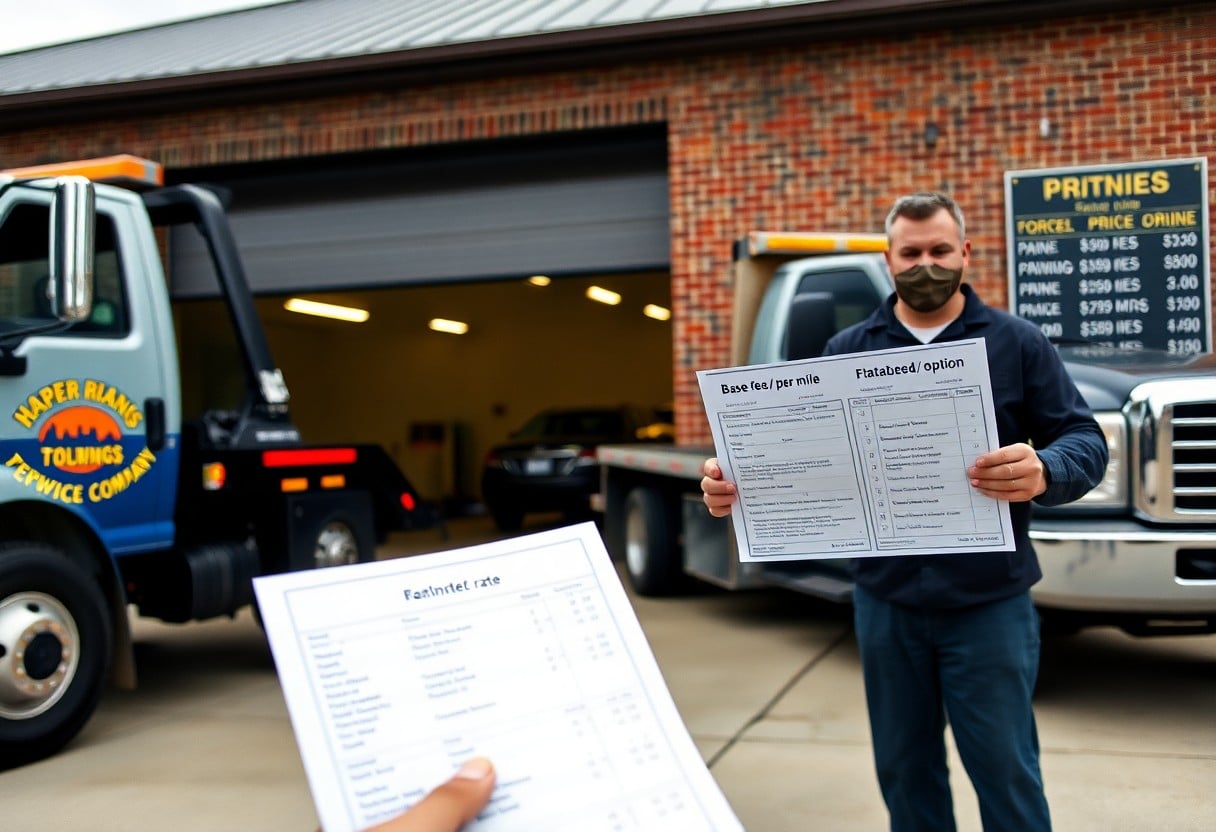
Pricing Structures for Plano Towing Services
Rates depend on time, vehicle size, and distance; when you call, ask for hookup and per-mile estimates plus potential add-ons.
Understanding Hook-up and Per-Mile Fees
You pay a hookup to secure the winch and driver, then a per-mile fee; confirm whether wait time, mileage minimums, or after-hours rates apply.
Factors Influencing Flatbed Rate Adjustments
Local demand, vehicle weight, and access difficulty shift flatbed pricing; towing companies may add labor or terrain charges you should confirm.
- Weight and size: heavier or oversized loads cost more.
- Access and equipment: tight spaces or long winching increase time.
- The time of day and fuel surcharges can raise your final bill.
Consider that special vehicles, additional crew, and long-distance hauls can add flat fees; you should ask for itemized quotes and confirm insurance coverage before authorizing the tow.
- Special equipment: oversized rigs or motorcycle adapters increase cost.
- Labor time: extra crew or complex loading raises hourly charges.
- The distance and local fuel prices influence the per-mile and surcharge rates.
Criteria for Selecting a Plano Towing Company
Compare response times, equipment options, pricing, and availability so you choose a Plano towing company that handles your vehicle type and emergency timing.
Licensing, Insurance, and Regulatory Compliance
Verify that the provider holds Texas towing licenses, carries liability and cargo insurance, and complies with local ordinances so you avoid unexpected liability or fines.
Evaluating Service Reliability and Reviews
Read recent customer reviews, check response-time claims, and confirm flatbed availability so you assess reliability before you call for service.
Check star ratings across multiple platforms, scan detailed comments for recurring praise or complaints about arrival times, driver conduct, and vehicle handling, consult the Better Business Bureau and local consumer agencies for formal complaints, and ask dispatchers about fleet age and flatbed access so you can confirm the operator’s real-world performance.
To wrap up
You will find that most towing services in Plano offer flatbed towing for safe transport of cars, motorcycles, and specialty vehicles; verify availability, equipment size, and pricing before scheduling to ensure proper handling.
FAQ
Q: Do towing services in Plano offer flatbed towing?
A: Yes. Many towing companies in Plano provide flatbed towing as a standard service, offering 24/7 availability from local operators and larger towing fleets.
Q: What types of vehicles can be transported on a flatbed in Plano?
A: Passenger cars, SUVs, luxury and classic vehicles, motorcycles, ATVs, light trucks, and small construction equipment can typically be loaded onto a flatbed. Weight and size limits vary by truck model, so confirm maximum towing capacity with the provider for oversized or heavy vehicles.
Q: How much does flatbed towing cost in Plano?
A: Local flatbed tows usually start with a hookup or base fee in the $75-$150 range, plus a per-mile rate commonly between $2.50 and $6.00. Long-distance moves, heavy or oversized vehicles, winching, recovery from difficult locations, and after-hours calls raise the price. Request a written estimate from the company for exact pricing.
Q: How long will it take for a flatbed tow truck to arrive in Plano?
A: Typical response times inside Plano are about 20-45 minutes depending on traffic, time of day, and operator availability. Peak hours, severe weather, or remote locations can increase wait times. Ask the dispatcher for an estimated arrival when you call.
Q: Are flatbed tows safe for my vehicle and is insurance provided?
A: Flatbeds are one of the safest towing methods because the towed vehicle sits entirely on the bed, eliminating drivetrain stress and tire wear. Professional drivers use wheel straps, chocks, and tie-down points to secure vehicles. Verify the towing company’s insurance coverage and ask for proof of liability and cargo insurance before authorizing the tow.