It’s best to call a professional tow truck in Lucas when your vehicle is stuck off-road; you receive specialized equipment, trained operators, and local knowledge to recover and transport your vehicle safely.

Understanding Off-Road Recovery vs. Standard Towing
You see that off-road recovery uses winches, specialized rigs, and trained crews to extract vehicles from mud, ditches, or steep trails, while standard towing relies on lifts and flatbeds meant for paved roads and safer recoveries.
Defining the specialized nature of recovery
Understand that recovery requires winches, anchoring, rigging know-how, off-road-capable vehicles, and risk assessment so you protect your vehicle and crew during extraction.
Why standard tow trucks may struggle in Lucas terrain
Expect standard tow trucks to struggle with deep ruts, soft soils, steep drainage, and narrow farm lanes common around Lucas, leaving you needing a unit with more ground clearance and recovery gear.
Consider that Lucas’s mix of clay soils, seasonal floods, and steep creek crossings creates poor traction and concealed hazards; when you call a standard tow truck it may get stuck, lack proper anchors, or be unable to angle for a safe hook point, so you often need a recovery operator with winches, off-road tires, and trained spotters to clear the scene safely.
Essential Equipment for Off-Road Extraction
You should carry a heavy winch, snatch blocks, rated recovery straps, traction boards, a shovel, and ground anchors to extract vehicles safely in Lucas’s varied terrain.
Heavy-duty winches and snatch blocks
Winches must match your vehicle’s gross weight, use proper line ratings, and pair with snatch blocks to double pulling power and reduce motor strain during complex pulls.
Ground anchors and specialized rigging
Anchors such as deadman kits, sand screws, and tree protectors give you secure attachment points when trees or rocks aren’t available, widening your rigging options and improving safety.
When you set up ground anchors, verify their rated capacity, orient rigging to avoid side-loading, and use shackles and soft shackles sized to the load; bury deadman anchors deeply and test under controlled tension, and always build redundancy with multiple anchors or a backed-up anchor to prevent failure.
Common Off-Road Scenarios in the Lucas Area
Local trails present mud, sand, steep banks, and washouts that commonly trap vehicles; you rely on tow trucks for powered winches, anchoring, and skilled rigging when simple self-recovery fails.
Mud and soft soil entrapment
Vehicles sinking into Lucas’s clay and sandy mixes often require low-angle winch pulls; a tow truck can apply traction mats, reduce tire pressure, and use controlled pulls to free you without deepening the hole.
Steep embankments and ditch extractions
Slopes and ditches demand precise rigging and anchor selection; a tow truck operator can set winch angles and secure anchors so you avoid rollovers while the vehicle is recovered.
When you face an embankment extraction, the operator will assess slope angle, anchor options, and the vehicle’s center of gravity, then pick recovery points and winch line angles to minimize tip risk; stay at a safe distance and follow crew directions as they use snatch blocks, synthetic lines, and rated hardware to lower the vehicle steadily.
Assessing Vehicle Accessibility and Safety
You must inspect the ground for soft spots, ruts, and overhead obstructions, then check traffic and escape routes so the tow crew can access your vehicle safely and plan an appropriate extraction angle.
Evaluating ground clearance and approach angles
Measure your vehicle’s ground clearance and approach/departure angles to confirm that winch hooks or lifting points can be reached without scraping; share these specs with the operator so they select the right rig and attachment method.
Mitigating further damage during the pull
Protect sensitive components by disconnecting batteries, securing loose panels, and removing cargo that could shift, and instruct the operator to use rated recovery points, soft straps, or chassis lifts rather than bumper pulls.
Coordinate with the tow operator to verify your vehicle’s rated recovery points, winch capacity, and preferred attachment method before any movement; you should insist on low-angle pulls, use of snatch blocks to reduce line load and change direction, and tag lines to control rotation. Monitor cable tension, pad contact areas to prevent body damage, and stop immediately if components bind or unusual noises appear.
The Role of 4×4 Recovery Units
4×4 recovery units bring specialized winches, high-clearance chassis, and trained crews to help you extract stuck vehicles from mud, sand, or creek beds, increasing safety and reducing risk of further damage.
Advantages of all-wheel-drive service vehicles
All-wheel-drive service vehicles provide superior traction on rutted tracks and shallow mud, letting you recover cars with less slippage, improved stability, and faster turnaround on rough Lucas trails.
Navigating unpaved or rural access points
You should expect recovery crews to assess gate widths, creek crossings, and soft shoulders so they can pick the best approach, protect property, and avoid getting additional equipment stuck.
Before calling a recovery team, you can photograph access points, flag narrow gates, and note overhead clearance and soft spots so crews arrive with the right winch angles, snatch straps, and ground mats; this preparation shortens on-site time and lowers the chance of further vehicle or property damage.
Choosing a Professional Recovery Service in Lucas
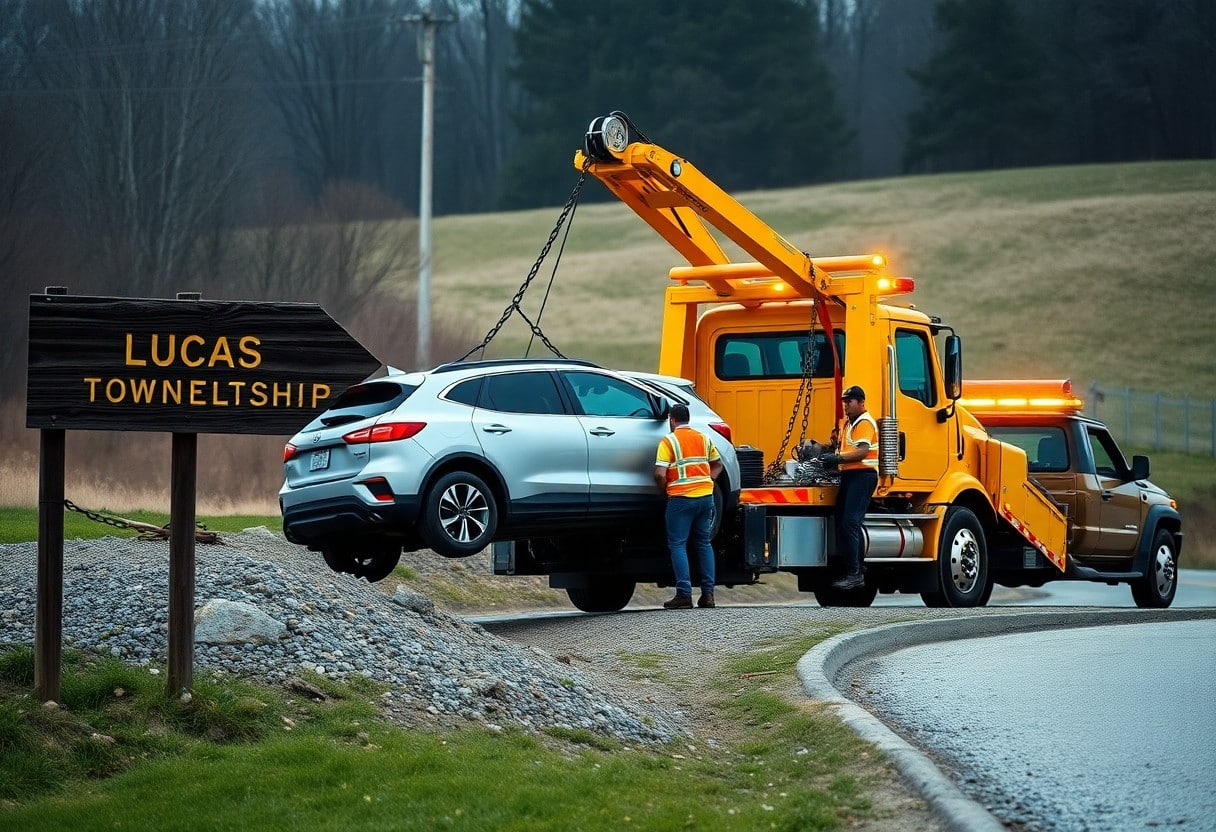
Local recovery teams should be vetted by you for response time, specialized off‑road equipment, and experience with soft‑ground or creek recoveries in Lucas; request written estimates and clear pricing before commitment.
Verifying insurance and technical expertise
Check that you receive proof of liability and towing insurance, operator certifications, and documented experience with winches, snatch blocks, and low‑angle recoveries before they begin work.
Environmental considerations and land preservation
Protect nearby vegetation and soil by requiring the crew to use matting and timber tracks; you should insist they avoid wet routes and comply with any permits or landowner rules during recovery.
Ask the provider for specific mitigation steps you can verify on site, such as portable mats, spill‑containment kits for fuels and fluids, rut repair plans, and coordination with landowners or agencies for permits and seasonal restrictions; you can request before‑and‑after photos and a short restoration checklist to reduce lasting damage.
Conclusion
Taking this into account, you can expect a Lucas tow truck to recover many stuck vehicles, but you should call a service with winch-equipped, four-wheel-drive units for deep mud, steep slopes, or heavy damage; you may need specialized off-road recovery crews for extreme situations.
FAQ
Q: Can a tow truck help with off-road recovery in Lucas?
A: A local tow truck can often assist with off-road recoveries in Lucas, depending on access and conditions. Tow operators frequently use winches and 4×4 wreckers to pull vehicles from mud, ditches, and soft ground. Municipal or private property access restrictions may require landowner permission before recovery. Severe situations such as deep water, steep embankments, or vehicles trapped under obstacles may require specialized recovery crews or rotator tow trucks.
Q: What types of tow trucks and equipment handle off-road recovery?
A: Tow companies use several truck types and recovery tools for off-road work. A winch-equipped 4×4 wrecker provides traction and pulling power on soft or uneven terrain. Flatbed trucks haul disabled vehicles out when the scene allows a stable loading area. Rotator wreckers handle heavy or precarious recoveries where controlled lifting and rotation are necessary. Common tools include heavy-duty winches, snatch blocks, tree-saver straps, shackles, and portable anchors.
Q: When should I call a specialized off-road recovery service instead of a standard tow truck?
A: Contact a specialized off-road recovery service when access is limited, the vehicle is in deep mud or water, or the slope and hazards exceed standard towing capabilities. Specialized crews bring heavier winches, portable anchors, recovery boards, and experienced rigging techniques to reduce risk of damage. Emergency responders may need to be involved if a medical issue or environmental hazard exists at the scene.
Q: What should I do while waiting for off-road recovery in Lucas?
A: Move vehicles and people to a safe location away from passing traffic if possible. Set hazard lights, place warning triangles if you have them, and avoid standing downhill of a vehicle on a slope. Provide precise location information to the tow operator using GPS coordinates, visible landmarks, or photos. Keep keys accessible, document damage for insurance, and wait in a safe area until trained operators arrive.
Q: How much does off-road recovery cost in Lucas and what factors affect the price?
A: Costs for off-road recovery in Lucas depend on time, difficulty, equipment, distance, and whether landowner permission or municipal permits are required. Simple roadside pulls often range from $150 to $500, while complex recoveries using rotators, extended winching, or long-distance hauling can exceed $500 to $1,500 or more. After-hours calls, remote locations, heavy vehicles, and environmental cleanup increase charges. Ask for a detailed estimate before work begins and check whether your insurance or roadside assistance policy covers part of the cost.