Anna allows towing of passenger cars, motorcycles, light trucks, recreational vehicles, and trailers; you must follow posted signs, permit rules, and retrieval procedures to reclaim towed property.
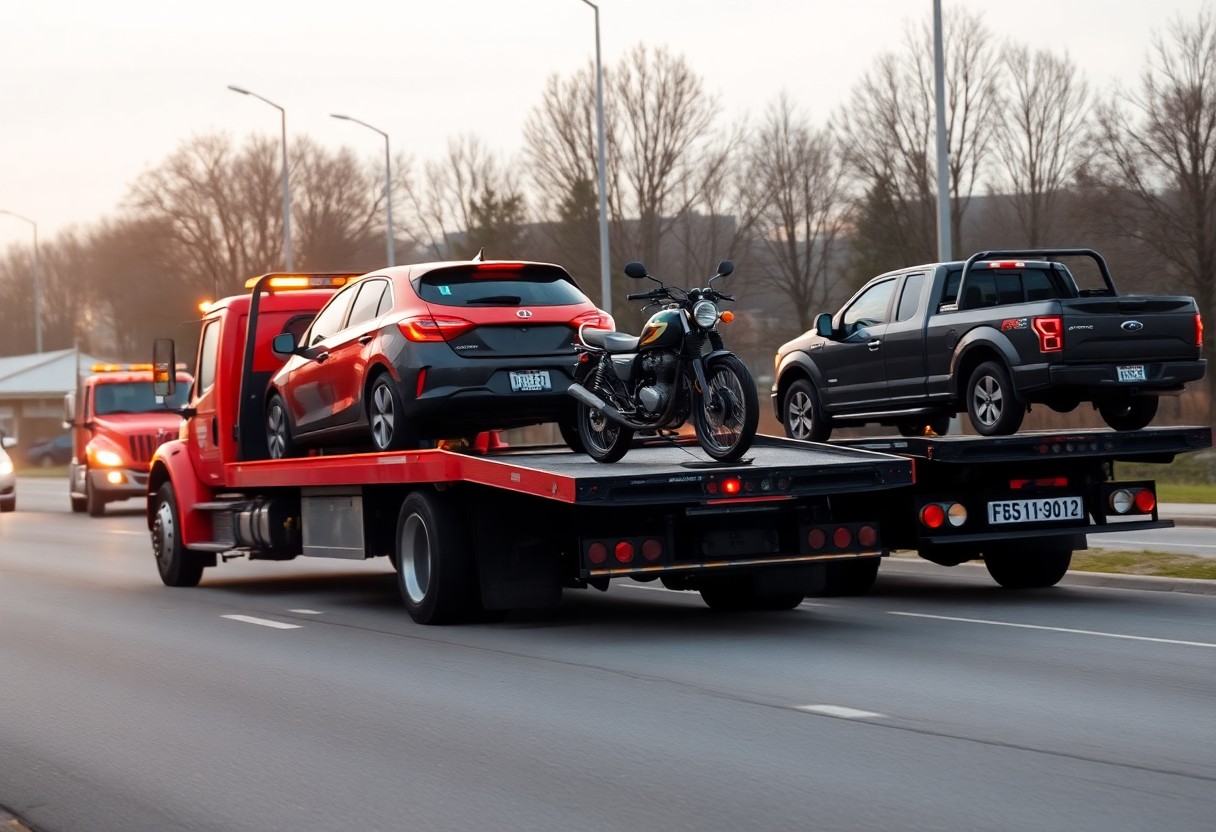
Light and Medium-Duty Trucks
Light-duty and medium-duty trucks can be towed in Anna when you and the towing operator confirm GVWR, hitch class, and local permit requirements to ensure legal, safe transport.
Pickup Trucks and Work Vans
Pickup drivers should verify your truck’s hitch class, tongue weight, and brake compatibility before towing to prevent damage and citations.
Delivery and Box Trucks
Delivery vehicles often require flatbed or rollback service; you should provide cargo manifests and secure loose items to comply with Anna’s towing rules.
Box trucks frequently exceed axle or GVWR limits, so you must coordinate permits, use appropriate towing equipment, and confirm weight distribution and brake connections before transport to avoid extra fees or safety hazards.
Heavy-Duty and Commercial Vehicles
Commercial heavy towing covers buses, box trucks, and fleet vehicles; you should expect specialized rigs, trained operators, and possible permits for oversized or hazardous loads.
Semi-Trucks and Tractor-Trailers
Semi-trucks and tractor-trailers require heavy-duty tow trucks, dual-axle dollies, and experienced crews; you face weight, length, and load securement considerations before removal.
Construction and Industrial Equipment
Equipment like excavators, loaders, and bulldozers need lowboy trailers and boom trucks; you must coordinate site access and lifting plans for safe transport.
When moving large equipment, you should secure attachments, drain fluids, and calculate axle loads; you may need permits, pilot cars, and route approval from local authorities to avoid road damage and fines.
Motorcycles and Powersports
Motorcycles and powersports vehicles demand specialized towing; you should verify tie-down points, wheel chocks, and carrier capacity for your bike’s weight and frame, and follow Anna’s local securement and transport rules.
Two-Wheel and Three-Wheel Motorcycles
Two-wheelers and trikes often require rear-wheel support or full-frame lifts; you should use soft straps to avoid pressure on suspension or bodywork and confirm trailer restraints match the wheelbase.
ATVs and Utility Task Vehicles
ATVs and UTVs vary in size; you should secure them using low-angle ramps, tie-downs at solid frame points, and wheel blocks to prevent movement during transport.
You should remove loose cargo, disconnect batteries if required, balance load fore-aft and side-to-side, and check straps mid-trip; oversized ATVs may need permits or specialized carriers in Anna.
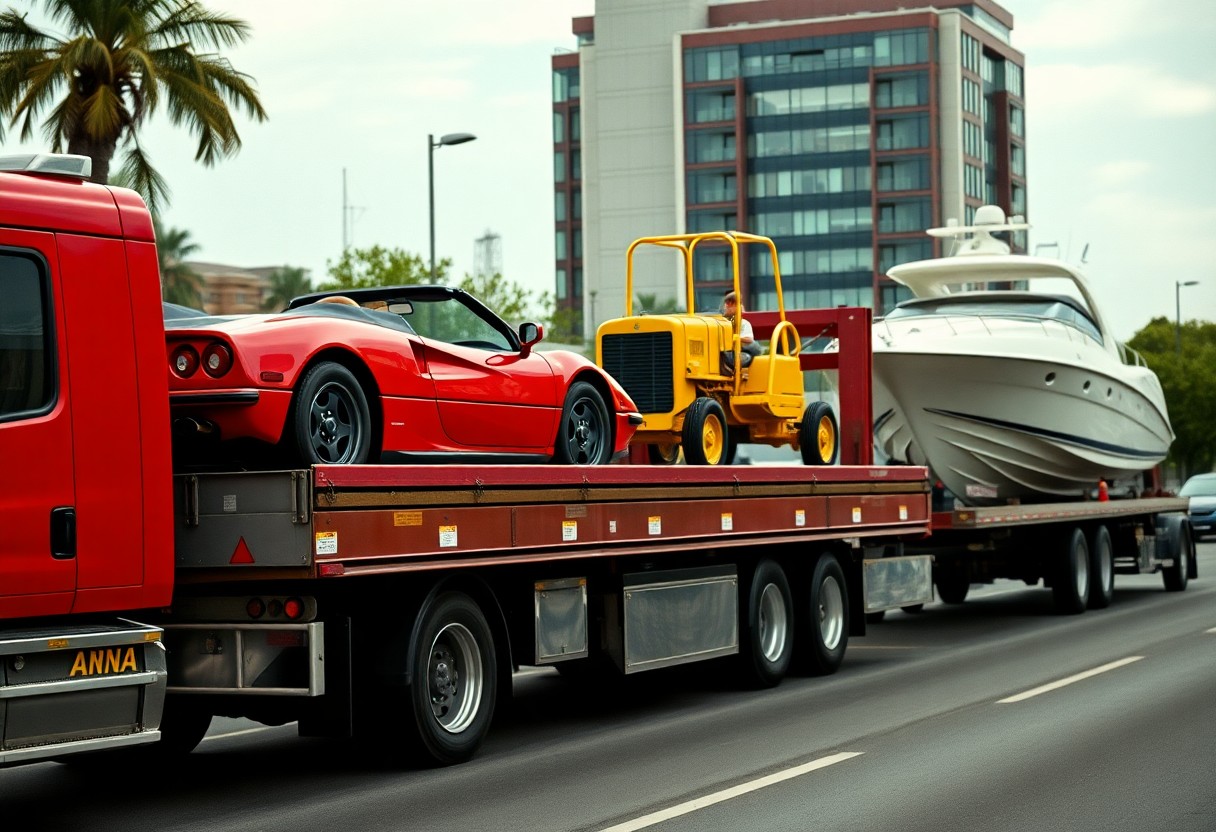
Specialized and High-Value Transport
High-value vehicles demand enclosed carriers, air-ride trailers, and technicians who handle loading so you avoid cosmetic or mechanical damage.
Classic and Exotic Car Towing
Classic collectors expect soft straps, frame-secure methods, and climate-controlled transport so you protect paint, interiors, and original components.
Low-Clearance and Modified Vehicles
Low-clearance cars require specialized dollies, tilt-bed trailers, or air-suspension adjustments so you prevent scraping and stress on custom components.
When transporting low-clearance or modified vehicles, you must measure ride height and wheelbase, secure at factory-approved lift points, and use low-angle loaders or flatbeds to avoid chassis contact. You should pad bodywork, remove spoilers or antennas if needed, and brief the driver on suspension limits so they select air-ride trailers, adjustable dollies, and routes with adequate curb and bridge clearances.
Summing up
You can have sedans, SUVs, motorcycles, trucks, RVs, trailers, and unregistered or inoperable vehicles towed in Anna, subject to parking rules, weight limits, and tow-company capabilities; oversized or specialty loads may need permits or flatbed service.
FAQ
Q: What types of passenger vehicles can be towed in Anna?
A: Passenger cars, sedans, hatchbacks, compacts, coupes, station wagons, most crossover SUVs, and light-duty pickup trucks are commonly towed in Anna. Standard light-duty tow trucks and flatbeds handle most of these vehicles, with flatbeds preferred for all-wheel-drive, low-clearance, or severely damaged cars. Municipal towing rules apply when vehicles are impounded for violations or accidents, so ownership and registration documents may be required for release.
Q: Can motorcycles, scooters, and electric bikes be towed in Anna?
A: Motorcycles and scooters are towed using wheel-lift adapters, motorcycle trays, or flatbeds to prevent frame and suspension damage. Proper chocks, straps, and soft loop tie-downs must be used to secure two-wheelers, and many operators recommend flatbeds for higher-value or heavily damaged bikes. Electric bikes and mopeds may require similar precautions and sometimes special handling because of batteries; inform the tow company about battery type and charge level.
Q: Are light commercial vehicles and small trucks towable within Anna?
A: Light commercial vans, service trucks, small box trucks, and medium-duty pickups are towable when matched with appropriate light- to medium-duty wreckers. Gross vehicle weight rating (GVWR) determines whether a standard tow truck is sufficient or if a medium- to heavy-duty wrecker is needed. Fleet vehicles and commercial carriers often have specific procedures and may require proof of ownership or carrier authorization before release.
Q: What requirements apply to towing trailers, RVs, and boats in Anna?
A: Travel trailers, utility trailers, camper trailers, RVs, and boats on trailers can be towed if the towing vehicle, hitch, and trailer are rated and equipped correctly for the combined weight. Trailers over certain weight thresholds must have working brakes and lights, and overlength or overweight loads may need special permits for transport on public roads. Secure tie-downs, proper tongue weight, and current registration for both the tow vehicle and trailer are commonly required by local authorities and tow operators.
Q: Which vehicles need special towing equipment or cannot be towed by standard trucks in Anna?
A: Heavy commercial rigs, tractor-trailers, farm equipment, construction machinery, and oversized loads require heavy-duty wreckers, recovery cranes, or specialized lowboy transport and often need permits and coordination with state or local agencies. All-wheel-drive vehicles, electric vehicles with damaged drivetrains, and cars with severe frame damage typically require flatbed transport or specialized recovery to avoid further damage. Impounded or salvage-designated vehicles may also have administrative holds that affect towing and release procedures.