Many drivers encounter vehicle breakdowns on busy Plano roads; you should pull onto the shoulder if safe, activate hazards, call for roadside assistance, and notify 911 if traffic or injury threatens.
Immediate Safety Protocols for Plano Drivers
If your car becomes disabled on a busy Plano road, prioritize moving out of traffic, switching on hazards, and calling for help while keeping passengers away from passing lanes.
Activating Hazard Signals and Warning Devices
Activate your hazard lights, set the parking brake, and place reflective triangles or flares behind the vehicle if it is safe to do so to warn approaching drivers.
Maneuvering to the Shoulder or Nearest Safe Exit
Steer toward the shoulder or nearest safe exit at low speed, signal early, and check mirrors and blind spots before changing lanes.
Before you change lanes, scan for gaps, signal well in advance, and adjust speed gradually to match traffic; if reaching the shoulder isn’t safe, remain in your lane with hazards on, keep seatbelts fastened, and call 911 or your roadside assistance for instructions.
Local Law Enforcement and Traffic Management Roles
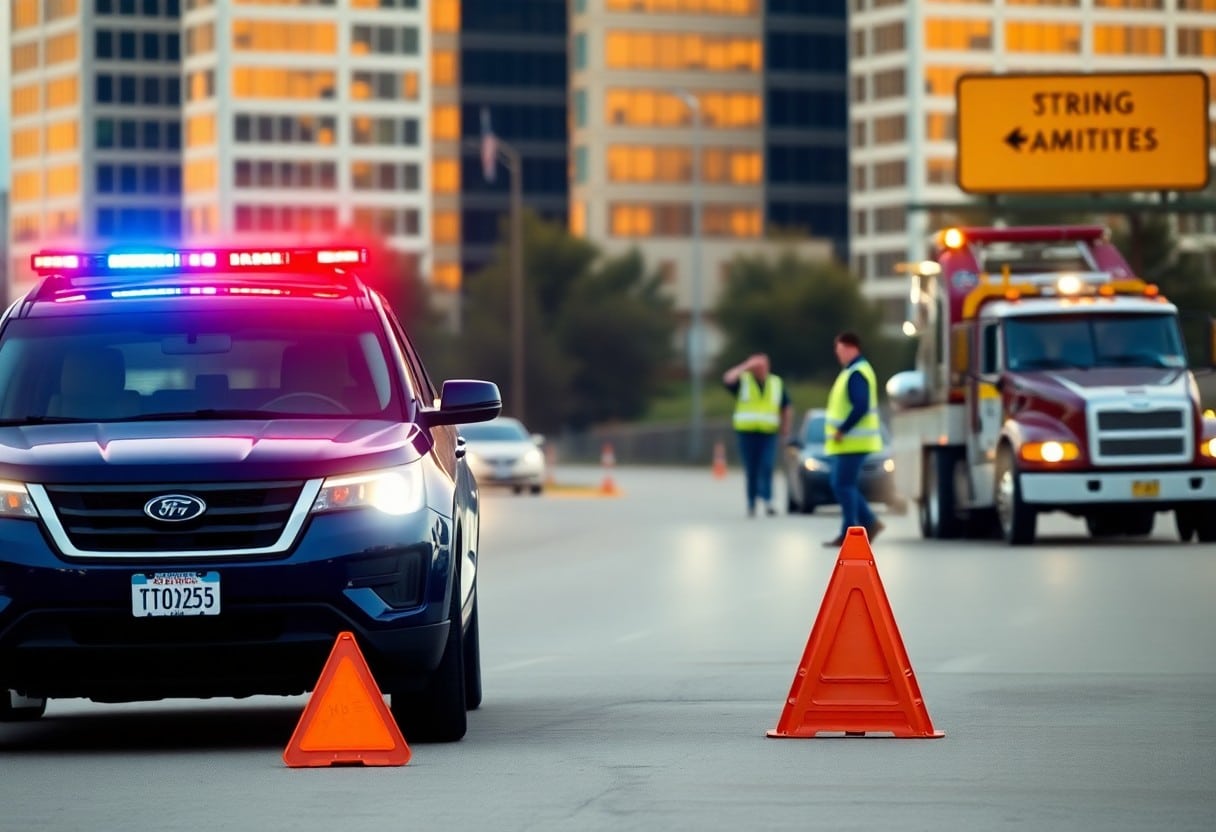
Police and traffic units work together to secure the scene, direct traffic, and help you move off the roadway or arrange towing; expect temporary lane closures and signage while they restore safe flow.
Plano Police Department Incident Response
Plano Police typically arrive quickly, assess hazards, set up traffic control, assist you with safety measures, and coordinate towing and reports; you must follow officer directions and remain away from moving lanes.
Coordination with the Texas Department of Transportation (TxDOT)
TxDOT crews may be called to clear debris, deploy barriers and signs, or manage lane closures; you might see their vehicles and message boards guiding traffic while officers handle the incident.
If your disabled vehicle creates a persistent hazard, TxDOT’s incident response will coordinate with Plano Police to prioritize lane clearance, dispatch tow contractors, position message signs or lighting, and remove debris; you should provide clear location details when asked, wait in a safe spot off the roadway, and expect crews to work to reopen lanes and reduce backups.
Texas “Move It” Laws and Driver Responsibilities
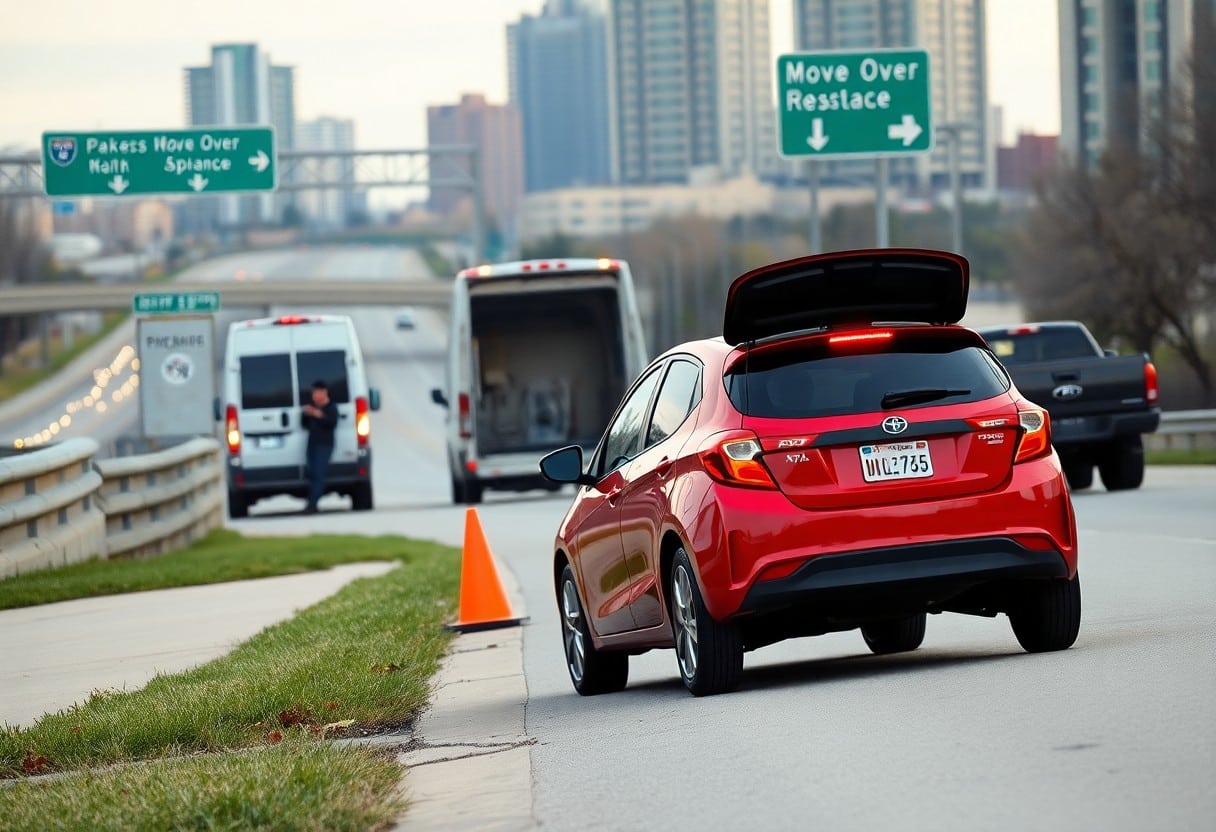
Under Texas’ Move It law, you must move a disabled vehicle off a busy roadway when safe to do so or at least place it on the shoulder; call law enforcement if you can’t to reduce hazards and avoid citations.
Legal Requirements for Relocating Disabled Vehicles
Local statutes require you to attempt moving your disabled car to the nearest shoulder or exit when safe, use hazard lights and warning devices, and notify authorities if you cannot relocate.
Liability Considerations for Obstructing Traffic Flow
You can face citations or civil liability if your disabled vehicle blocks traffic and causes an accident; failing to warn or move the car heightens your responsibility.
Penalties may include fines, towing and storage costs, and civil damages if your obstruction contributes to injury; you could also share fault under comparative negligence, increasing your financial exposure and insurance premiums, so document the scene, call police, and keep records of towing and repairs.
Navigating High-Traffic Corridors in Plano
When your vehicle stalls on a busy Plano corridor, you should move off the travel lane if safe, activate hazards, and call for assistance while remaining in the vehicle if exiting would put you at risk.
Specific Risks on US-75 and President George Bush Turnpike
US-75’s high speeds and narrow margins increase collision chances when you are disabled; you should steer to the shoulder, keep hazards on, and notify authorities with your exact location.
Utilizing Plano’s Public Safety Roadside Assistance Programs
If your car is disabled, you should contact Plano’s public safety roadside assistance or 911, provide location and vehicle details, follow dispatcher instructions, and wait in the vehicle with hazards on unless responders advise otherwise.
Contact Plano’s non-emergency number or 911 when lanes are blocked; provide cross-streets, mile markers, and vehicle color so responders find you quickly. You can expect officers to provide traffic control, request tow services, and coordinate with TxDOT for cleanup; remain in your car with your seatbelt on unless an officer directs you to exit.
Professional Recovery and Towing Procedures
You should stay in a safe spot while authorized tow operators secure your vehicle, clear traffic lanes, and use wheel-lift or flatbed equipment; they follow traffic control and scene safety protocols to minimize delays and risk.
Identifying Authorized Towing Services and Regulations
Check Plano ordinances or police dispatch to confirm permitted towers, service area boundaries, and fee caps; ask the company for ID, written tow authorization, and proof of insurance before you release your vehicle.
Documentation for Insurance and Mechanical Repair
Keep copies of tow receipts, dated photos of the scene and damage, the police report number, and the towing company’s contact so you can file accurate insurance claims and repair estimates.
Collect all documents and evidence immediately: legible photos of license plates and VIN, odometer reading, timestamps, tow and storage invoices, signed tow authorization forms, names and badge numbers of responding officers, and a written estimate from a licensed repair shop. Keep originals and email copies to your insurer, note any personal items removed, and request a final release or lien receipt before retrieving the vehicle.
Preparing for Future Roadside Emergencies
Pack a roadside plan: emergency contacts, your roadside assistance membership, a charged phone and portable charger, and clear instructions for safe pullovers so you can act quickly and signal for help on busy Plano roads.
Essential Components of a North Texas Emergency Kit
Include water, nonperishable snacks, a reflective vest, triangle flares or LED hazard lights, basic tools, jumper cables, a tire inflator and sealant, and a first-aid kit to handle heat and traffic delays.
Preventive Maintenance to Mitigate Roadside Breakdowns
Check engine oil, coolant, belts, tire pressure and tread, battery condition, and lights regularly so minor issues don’t leave you stranded during Plano rush hours.
Perform monthly checks and a quick pre-trip inspection before long drives: check oil, coolant, brake fluid, belts, hoses, tire pressure and tread, wipers and battery. Follow your vehicle’s maintenance schedule for oil changes, brake service and belt replacements, keep a spare tire and jack, and scan warning lights promptly to address issues before they escalate.
Conclusion
Following this, you should pull your vehicle to the shoulder if safe, activate hazard lights, call 911 for hazards or police, request roadside assistance or a tow, and stay inside or behind barriers until help arrives.
FAQ
Q: What should I do immediately if my car becomes disabled on a busy road in Plano?
A: If your car becomes disabled, turn on your hazard lights right away and try to move the vehicle to the shoulder or as far off the travel lanes as possible. If the vehicle cannot be moved and traffic is heavy, stay inside with your seatbelt fastened unless leaving the vehicle is safer; exit on the curbside/passenger side if you must get out. Use reflective triangles or a flashlight if you have them to warn other drivers, and call 911 if you are in danger or blocking lanes. Contact your roadside assistance or a tow company once you are in a safe position.
Q: Who should I call for help and what kinds of responders will come?
A: Call 911 for immediate danger, injuries, or a vehicle blocking traffic. Plano Police or Texas Highway Patrol may dispatch to manage traffic, issue safety instructions, or arrange for tow services. Roadside assistance providers, AAA, or private tow companies will handle recovery and towing. TxDOT incident responders may assist on state highways and major freeways to help clear hazards and protect the scene.
Q: Will my car be towed or impounded, and will I face fines?
A: Police or traffic authorities can authorize a tow if your vehicle is obstructing traffic or parked illegally; that tow can result in impound and storage fees that you must pay to retrieve the vehicle. Officers may issue citations if the vehicle created a hazardous condition or violated parking/traffic rules. Keep the tow company receipt and any police report number to contest citations or file claims with your insurer.
Q: How long will assistance typically take and who pays for towing and repairs?
A: Response times vary by location, traffic, time of day, and demand; emergency dispatch receives priority, while commercial tow arrival can range from 20 minutes to over an hour. Payment for towing and repairs is normally the vehicle owner’s responsibility up front. Roadside assistance memberships or your auto insurance policy may cover some or all costs; submit receipts and a tow receipt to your insurer if coverage applies.
Q: What documentation and follow-up steps should I complete after my vehicle is disabled on a busy road?
A: Photograph the scene, vehicle damage, license plates, and nearby hazards as soon as it is safe to do so. Obtain a tow receipt and any police report or incident number, and get the tow company’s contact and storage facility details. Report the event to your insurance company, keep repair invoices, and seek medical attention if you or passengers show signs of injury. File any appeals or disputes promptly if you receive a citation or disagree with towing charges.