There’s typically a base fee of $75-$150 plus $2-$4 per mile; you can expect $100-$250 for a local tow, with extra charges for winching, flatbeds, or after-hours service.
Standard Towing Cost Breakdown in Plano
Typical tow charges in Plano combine a hook-up fee, per-mile transport, and possible labor or storage; you’ll see total costs vary by vehicle type, time of day, and distance.
Base Hook-up and Connection Fees
Hook-up fees commonly range from $75 to $150 for standard cars; you’ll pay more for SUVs, motorcycles, winch-outs, or emergency calls.
Average Per-Mile Transport Rates
Mileage rates often run $2-$4 per mile in Plano; you’ll encounter minimums for short hauls and higher per-mile costs for heavy or oversized vehicles.
Weekends and after-hours service usually add surcharges of 20-50%, and you should confirm minimum fees, waiting-time charges, and whether hookup is included in the quote.
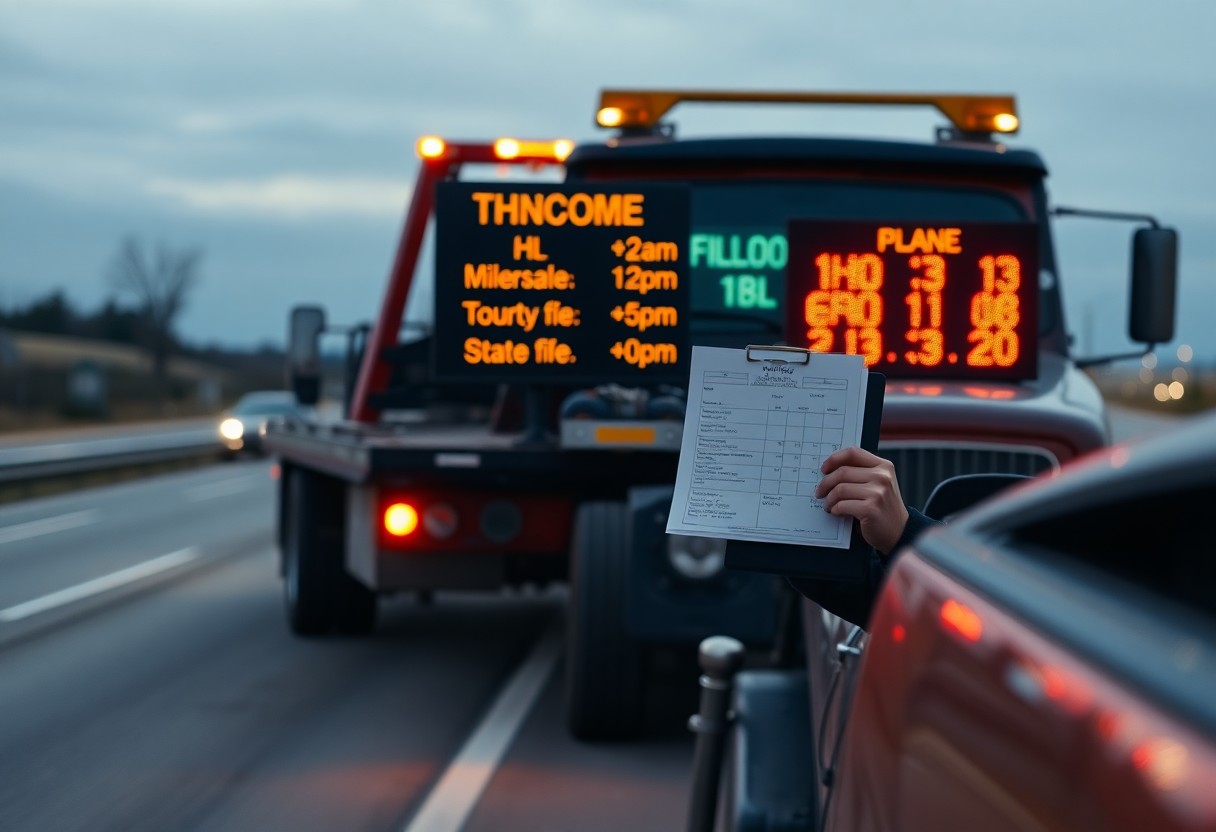
Key Factors Affecting Your Total Bill
Rates vary by:
- distance traveled
- truck type
- time of day
Knowing these factors helps you estimate costs and avoid surprises.
Vehicle Size and Weight Classification
Vehicle size and weight determine tow method; you may pay more for heavy, oversized, or commercial vehicles due to specialized equipment and extra crew requirements.
After-Hours and Emergency Surcharges
Surcharges apply when you request service outside normal business hours or for urgent recoveries; you will face higher flat fees or per-minute premiums for those calls.
Expect after-hours rates in Plano to rise sharply-many towers add 20-100% for nights, weekends, and holidays. You should also budget for rapid-response fees, long on-scene waits, hazardous recoveries, and holiday dispatch charges; mileage and storage still apply. Ask the operator for an itemized estimate before you authorize service to avoid surprises.
Specialized Towing and Recovery Services
Expect higher base rates for specialty tow and recovery work in Plano; you’ll typically pay extra per hour, higher minimums, and equipment surcharges when heavy-duty rigs or complex recoveries are required.
Flatbed vs. Traditional Wheel-Lift Costs
Flatbed hauls often cost more than wheel-lifts because you’re paying for extra equipment and labor; expect higher per-mile rates and possible hookup fees for oversized vehicles.
Winching and Off-Road Recovery Fees
Winching fees in Plano vary by depth and difficulty; you’ll often see a base winch fee plus extra hourly or service charges if recovery requires specialized gear or longer pull times.
Rates generally include a hookup fee, a distance charge, and additional increments for complex recoveries; if your vehicle is stuck off-road or needs extended line and manpower, you’ll face higher labor and equipment costs.
Local Regulations and Maximum Fee Caps
Plano enforces limits on towing and sets maximum fees so you won’t face unexpected charges; check city code and posted signage for specific caps.
Plano City Ordinances on Non-Consent Tows
Ordinances require written authorization and fee ceilings for non-consent tows, so you can dispute improper removals and seek refunds when limits are exceeded.
Daily Storage and Impoundment Costs
Storage fees accrue daily at municipal rates; you should retrieve your vehicle quickly to reduce expenses and follow posted release procedures to avoid extra holds.
When your vehicle is impounded, daily storage can add $20-$40 per day; you should factor in administrative release fees, required paperwork, and possible auction timelines that increase the total expense.
Insurance and Roadside Assistance Coverage
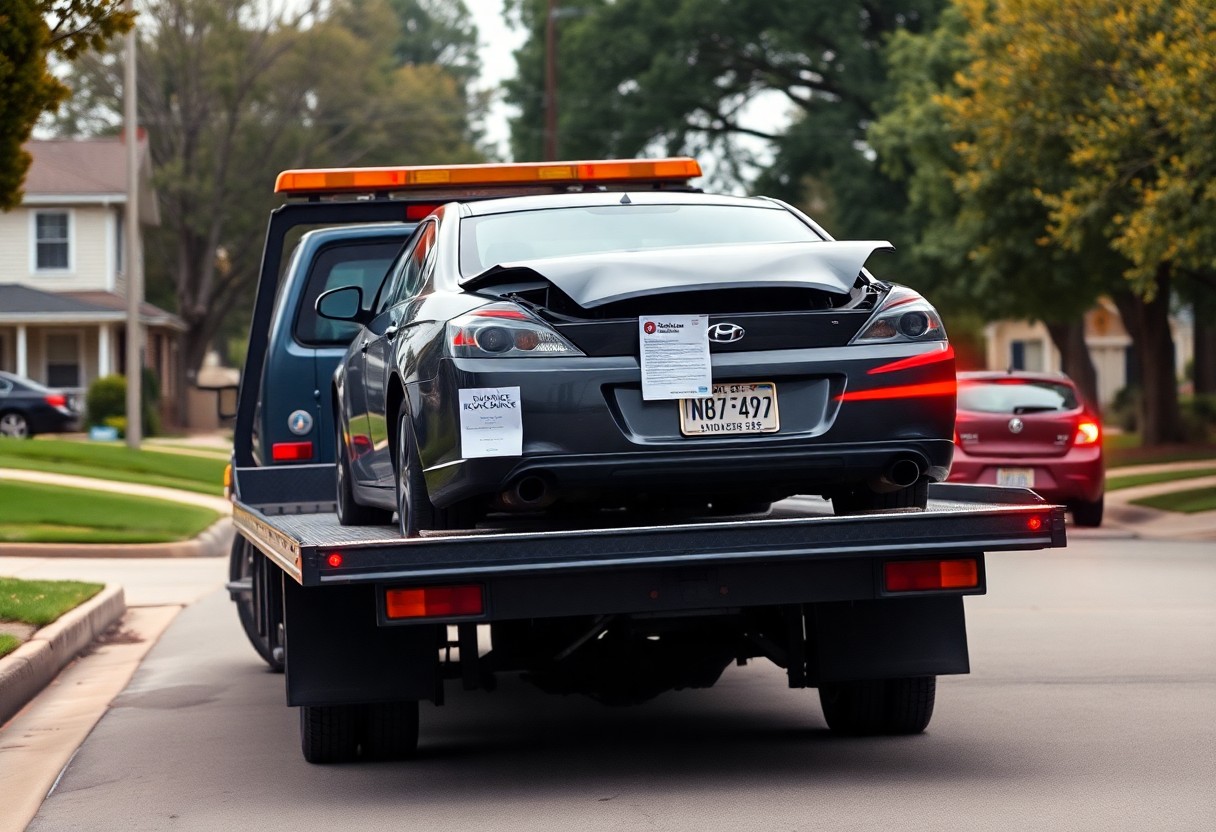
Insurance policies and roadside assistance often cover towing up to set limits, so you should check your tow allowance, deductible, and approved providers before calling a Plano tow; you may pay out of pocket if limits are exceeded or the provider is out-of-network.
Utilizing Membership Benefits
If you hold AAA or an insurer roadside membership, you can request a covered tow and avoid upfront payment; confirm your benefit limits, approved providers, and expected wait times to reduce surprises when a Plano tow arrives.
Reimbursement Procedures for Plano Residents
When you pay a tow upfront, save the itemized receipt, note the tow company and operator, and file a claim with your insurer or membership service promptly; approvals, timelines, and eligible amounts vary by policy.
Keep copies of receipts, photos, tow invoices, and service notes; submit the insurer’s claim form with vehicle info, odometer reading, and a detailed expense list, then follow up until you receive the reimbursed amount minus any deductible or coverage limits.
How to Avoid Overcharging and Scams
You should request a written estimate, compare local rates, and insist on clear terms before any work begins to avoid surprise fees or bait-and-switch tactics.
Requesting Detailed Itemized Quotes
Ask the tow operator for a written breakdown of hookup, mileage, labor, and storage charges so you can spot inflated line items and compare quotes quickly.
Verifying TDLR Licensing and Credentials
Confirm the company’s TDLR license number and current insurance on your phone, and decline service if the driver cannot produce valid credentials.
Visit the Texas Department of Licensing and Regulation website to verify the tow company’s license status, complaint history, and any disciplinary actions; note the license number, company name, and driver name before authorizing a tow, and photograph the truck, plate, and ID for your records.
Final Words
Summing up, you can expect a Plano tow truck to charge roughly $75-$150 hookup plus about $2-$5 per mile, with additional after-hours, winching, or heavy-duty fees; call providers for an exact quote.
FAQ
Q: How much does a tow truck charge in Plano, Texas?
A: Typical Plano tow rates for light-duty vehicles start with a hookup or base fee of about $75-$125 and a per-mile charge of roughly $3-$5. Local short tows often carry a minimum charge in the $75-$150 range. Flatbed tows and special handling can raise the base fee to $95-$150 and per-mile to $3.50-$6. Heavy-duty or commercial tows commonly start at $150-$300 plus $5-$10 per mile. Taxes, storage, release fees, and impound charges add to the final bill.
Q: What factors affect towing costs in Plano?
A: Several factors determine the final cost: vehicle size and weight, distance and travel time, time of day, type of tow or recovery required, location and accessibility, need for a flatbed or winching, on-scene labor/time, and any storage or impound fees. Company pricing policies and whether you use insurance or a membership service also affect what you pay.
Q: Are there extra fees for after-hours, weekends, or holidays?
A: After-hours, weekend, and holiday calls usually carry surcharges. Typical surcharges range from a flat $25-$75 to percentage increases of 25-75% depending on the company. Emergency recoveries, long winches, or difficult rescues add labor charges and may be billed at an hourly rate. Always ask the operator for the after-hours rate before they dispatch.
Q: How can I estimate a tow cost before calling?
A: To estimate cost before calling, note the vehicle type, exact pickup and drop-off addresses, and whether the vehicle can be towed on a wheel-lift or needs a flatbed. Call multiple tow companies and request the base fee, per-mile rate, minimum charge, and any surcharges for after-hours or special services. Inform them of any damage, four-wheel drive, or low clearance so they can quote appropriate equipment. Check with AAA or your insurer for covered towing or pre-negotiated rates. Ask for a written estimate or confirmation of the price before service begins.
Q: Should I wait for a flatbed or standard tow in Plano, and will it cost more?
A: Flatbeds cost more when required for vehicle safety or damage prevention. Typical extra charge runs $20-$50 on top of the base fee, and flatbed per-mile rates can be marginally higher. Request a flatbed quote if your car is low, has heavy damage, or is all-wheel-drive to avoid additional damage and surprise fees. If a standard tow is acceptable, confirm whether the operator uses a wheel-lift or hook-and-chain, since older methods can cause damage.